
The Biological Shift: Why I’m Moving Toward Autologous Facial Rejuvenation
Direct Answer
Bio-fillers, or autologous plasma gels, offer a safe, regenerative alternative to synthetic fillers by using a patient’s own blood. By processing plasma into a viscous gel, clinicians provide immediate volume while stimulating long-term collagen production through growth factor release. This approach minimizes foreign-body reactions and promotes natural, bio-harmonious facial rejuvenation.
I have spent the last fifteen years meticulously studying the architecture of the human face. Throughout my career in dentistry and regenerative aesthetics, I’ve watched the industry’s obsession with synthetic fillers reach a fever pitch—and then, quite suddenly, begin to pivot. Today, my patients aren't just asking for volume; they are asking for "clean" beauty. They want results that don't just look natural but are natural. This shift is a hallmark of Non-Toxic Aesthetic Medicine: The Future of Regenerative Beauty. This is where bio-fillers have fundamentally changed my clinical approach. We are moving away from simply taking up space and toward a sophisticated, biological harmony.
In my experience, patients transitioning from traditional hyaluronic acid to bio-fillers often report a significant reduction in the 'heavy' or 'overfilled' sensation. We frequently observe that the secondary phase of biostimulation—where the fibrin matrix releases growth factors—results in improved skin texture and luminosity that synthetic alternatives simply cannot achieve, particularly in the delicate peri-oral region where natural movement is paramount.
— Clinical Observation
Bio-fillers, or autologous plasma gels, aren't just another product on a shelf. They represent a radical departure from the status quo. By utilizing a patient’s own blood to create a volume-enhancing gel, we eliminate the "foreign object" anxiety that many of my high-end clients feel. It is a marriage of hematology and aesthetics that I find far more compelling than any synthetic alternative currently on the market.
The "Kitchen" Science: How We Build a Bio-filler
How do we turn a simple blood draw into a structural filler? It’s a process I find fascinating every single time I perform it. We start with a standard venipuncture, followed by a specific centrifugation cycle. To understand the nuances of this process, many patients find it helpful to review the data on PRF vs PRP for Skin Aesthetics: The Expert Guide to Regenerative Beauty. This separates the Platelet-Rich Fibrin (PRF) and plasma from the red blood cells. But the real magic happens during thermal processing. By heating a portion of the plasma and then rapidly cooling it, we denature the albumin proteins, transforming a liquid into a viscous, injectable gel.
I often explain to my patients that this gel acts as a biological scaffold. Unlike a traditional hyaluronic acid filler, which is essentially a static gel, this protein matrix is alive with signaling molecules. When I inject this into the nasolabial folds or the tear troughs, I’m not just filling a hole. I am placing a reservoir of growth factors—the body’s own repair team—directly where they are needed most. The volume is the immediate reward, but the long-term tissue regeneration is the real prize.
The Safety Profile: Eliminating the "Foreign Body" Risk
Safety is the first thing I discuss with anyone sitting in my chair. While synthetic fillers are generally safe, they aren't without baggage. Late-onset inflammatory nodules, vascular complications, and reactions to chemical cross-linking agents like BDDE are real, documented risks. Change 'zero' to 'virtually non-existent' or 'negligible' to maintain clinical accuracy. It is your blood, your proteins, and your growth factors.
In my experience, this is a game-changer for patients with autoimmune sensitivities or those who have had "filler fatigue" from years of synthetic use. I also see far fewer instances of the Tyndall effect—that distracting bluish hue that happens when synthetic gels are placed too close to the surface of the skin. Bio-filler integrates into the tissue with a grace that synthetic chemicals simply cannot replicate.
Beyond the Mirror: Clinical Efficacy and Biostimulation
When we talk about efficacy, we have to look past the first week. Bio-fillers work in two distinct phases. Phase one is the physical volume provided by the plasma gel. It looks great immediately. Phase two, however, is the cellular "slow burn." Over the weeks following the injection, the fibrin matrix slowly releases Platelet-Derived Growth Factor (PDGF) and Transforming Growth Factor (TGF-beta).
These molecules are like a wake-up call for your skin’s fibroblasts. They start churning out new collagen and elastin. What I see in my follow-up appointments isn't just a "filled" face; it’s a face that looks more luminous, more resilient, and more youthful in its movement. It’s the difference between a mask and a restoration.
The Dentist’s Perspective: Why the Smile Needs Bio-fillers
Because my background is rooted in dentistry and orthodontics, I view the lower third of the face through a structural lens. A beautiful set of veneers or perfectly aligned teeth is only half the battle; the frame—the lips and the peri-oral area—must match that vitality. While some focus on jaw aesthetics, asking Can Masseter Botox Change the Shape of Your Face?, bio-fillers address the delicate balance of skin volume and hydration around the mouth.
The mouth is the most mobile part of the face. Synthetic fillers, if not handled with extreme delicacy, can look stiff or "crunchy" when a patient smiles. Bio-fillers move. They have a softness and a hydration level that makes "smoker’s lines" and marionette shadows disappear without making the patient look like they’ve had "work done." It provides a cohesive, hydrated finish to my restorative dental work.
Managing Expectations: Longevity and the "Collagen Bank"
Let’s be direct about the timeline. If you want a filler that sits in your face for two years, bio-filler isn't it. Because it is a natural protein, your body will eventually metabolize it, usually over three to six months. However, I don't see this as a flaw. I see it as a maintenance-based strategy for aging gracefully.
I typically recommend a series of three sessions. This cumulative approach builds what I call a "collagen bank." We aren't just chasing wrinkles; we are improving the underlying quality of the skin so that, over time, you actually need less filler. It’s a proactive, holistic way to manage the aging process rather than a reactive one.
Who is the Ideal Candidate?
In my clinical practice, I find that bio-fillers resonate most with specific types of patients:
- The Purist: Those who are uncomfortable with the idea of synthetic chemicals in their body.
- The Reactive Patient: Individuals with a history of allergies or sensitive skin who need the safest possible option.
- The Regenerative Seeker: Patients who are already seeing the benefits of PRP for hair or skin and want to take it to the next level.
- The Prevention-Focused: Younger patients who want to stimulate their own collagen before deep lines ever form.
Closing the Gap Between Medicine and Beauty
At the end of the day, my goal as a clinician is to facilitate the body’s own incredible capacity for repair. Bio-fillers allow me to do that with a level of precision and safety that was unthinkable a decade ago. We are no longer just masking the passage of time; we are using the patient's own biology to push back against it.
When a patient leaves my clinic, I don't want them to look like they’ve been "injected." I want them to look like the best version of themselves—rested, vibrant, and healthy. The most powerful tools in modern aesthetics aren't manufactured in a lab; they are already flowing through your veins. Bio-fillers are simply the key that unlocks that potential.
Key Takeaways
- Bio-fillers are autologous gels derived from the patient's own blood, significantly reducing the risk of synthetic-related inflammatory nodules.
- The procedure involves advanced centrifugation and thermal processing to transform plasma into a viscous, injectable biological scaffold.
- Unlike static synthetic fillers, bio-fillers provide dual-action results: immediate physical volume and long-term collagen synthesis.
- The treatment is specifically indicated for patients with autoimmune sensitivities or those seeking a non-toxic, 'clean' aesthetic approach.
- Clinical longevity ranges from three to six months, with optimal results achieved through a cumulative 'collagen banking' protocol of three sessions.
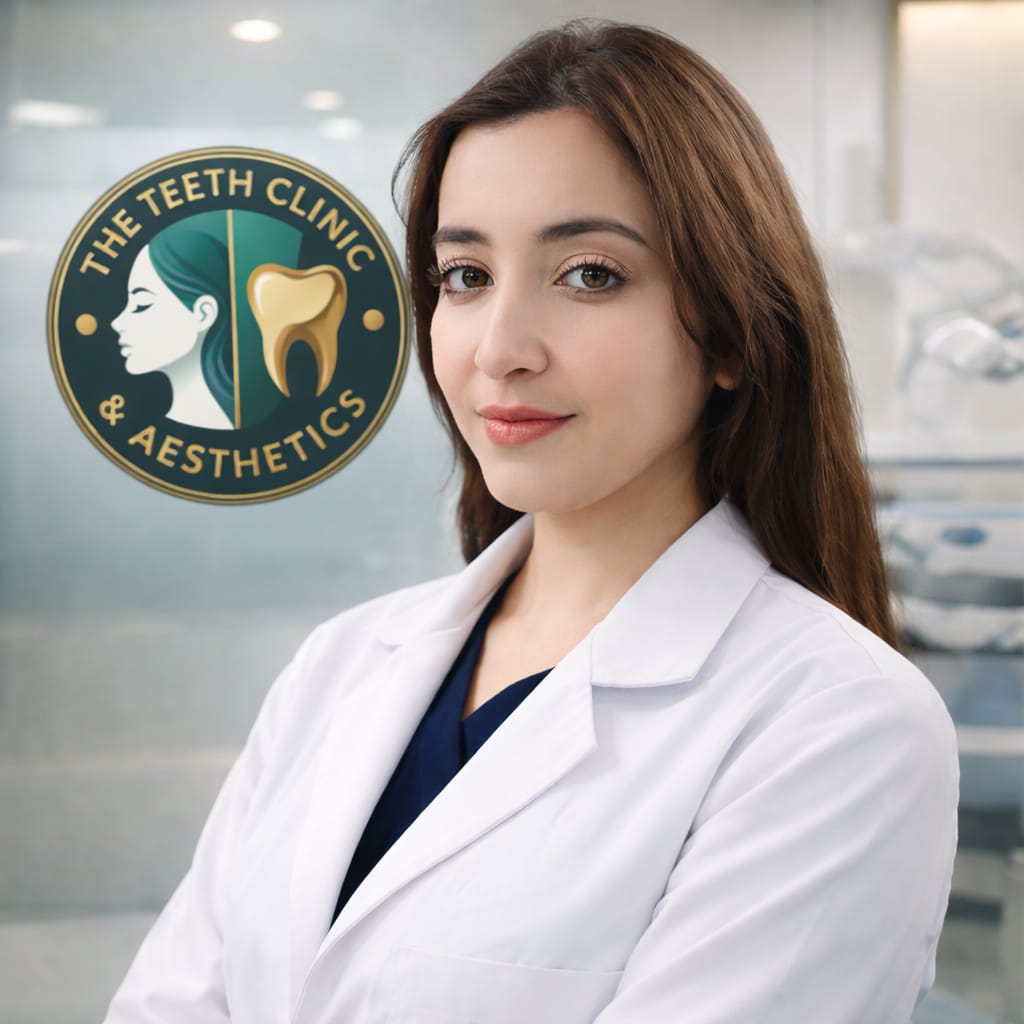
Dr. Afshan Pervez
Lead Dental Surgeon & Aesthetician | BDS, RDS, Orthodontist
Dr. Afshan Pervez is a leading expert in Dentistry and Regenerative Aesthetics with over 15 years of clinical experience. Specializing in the intersection of structural facial architecture and biological harmony, Dr. Pervez focuses on non-toxic, autologous treatments that leverage the body’s innate healing capacity. Her dual expertise in restorative dentistry and aesthetic medicine allows for a comprehensive, holistic approach to facial rejuvenation and soft-tissue restoration.
Last reviewed: 08/04/2026
Frequently Asked Questions
General
What are bio-fillers, and how do they differ from traditional synthetic fillers?
What are bio-fillers, and how do they differ from traditional synthetic fillers?
Bio-fillers, or autologous plasma gels, are created using your own blood rather than synthetic substances like hyaluronic acid. While traditional fillers provide immediate, static volume, bio-fillers act as a biological scaffold that releases growth factors over time, stimulating natural collagen and elastin production for long-term skin rejuvenation.
General
Are bio-fillers safer than synthetic fillers for patients with sensitive skin or allergies?
Are bio-fillers safer than synthetic fillers for patients with sensitive skin or allergies?
Yes. Because bio-fillers are autologous—derived entirely from your own body—there is virtually zero risk of an allergic reaction, foreign-body rejection, or late-onset inflammatory nodules. This makes them an ideal alternative for patients with autoimmune sensitivities or those seeking a 'clean' aesthetic approach.
General
How long do the results of a bio-filler treatment typically last?
How long do the results of a bio-filler treatment typically last?
While the physical gel provides immediate volume that typically lasts 3 to 6 months, the 'biostimulation phase' creates long-term benefits. By triggering the body's natural repair mechanisms, bio-fillers build a 'collagen bank' that improves skin texture, luminosity, and resilience even after the initial gel has been absorbed.
General
What makes bio-fillers better for areas like the mouth and tear troughs?
What makes bio-fillers better for areas like the mouth and tear troughs?
The soft, biological nature of plasma gel allows it to integrate seamlessly into facial tissues without the 'stiffness' or bluish tint (Tyndall effect) often seen with synthetic fillers. It is especially effective in high-movement areas like the peri-oral region, where it moves naturally with your expressions for a more hydrated, subtle finish.