The Optical Glitches That Disrupt a Smile
Direct Answer
Enamel microabrasion is a conservative clinical procedure used to remove superficial white spots and surface irregularities. By applying a specialized acidic and abrasive slurry, dentists gently buff away a microscopic layer of enamel. This process restores the tooth's natural translucency and uniformity without the need for invasive drilling, needles, or porcelain veneers.
I spend a massive portion of my day peering through high-magnification loupes, and if there is one thing I’ve learned, it’s that a smile is a game of light physics. Patients come to me wanting "whiter" teeth, but what they usually actually want is uniformity. When a patient has a milky, opaque blotch right in the center of a front incisor, it doesn’t matter how bright the rest of the teeth are; the eye is magnetically drawn to that one "optical glitch." In my chair, I treat these white spot lesions not as stains, but as structural anomalies. These aren't surface-level pigments; they are areas where the enamel’s mineral architecture is disorganized, porous, and basically acting like a sponge for light rather than a mirror.
In our practice, we often see patients who are frustrated after spending significant amounts on over-the-counter whitening products, only to find their white spots appear more prominent. Clinical observation shows that these lesions are frequently the result of post-orthodontic decalcification or mild fluorosis, which respond exceptionally well to microabrasion paired with resin infiltration to restore the enamel's refractive index and structural integrity.
— Clinical Observation

Diagnosing these marks is my version of forensic dentistry. I have to look at the patterns to understand the history of the tooth. Fluorosis usually presents as a lacy, almost artistic mottling—a byproduct of a childhood spent with just a bit too much fluoride. Then there are the "white scars" of decalcification, which I see constantly in patients who have just had their orthodontic brackets removed. It’s the ghost of plaque past. Finally, there is hypoplasia, a developmental hiccup where the tooth simply didn't "knit" its enamel correctly in the first place. You cannot treat a structural void with a surface scrub, which is why traditional cleaning always falls short.
The frustration my patients feel is palpable because these spots are in the tooth, not on it. You can't brush them away any more than you could brush away a bubble inside a glass marble. My mission is to restore the "translucency" of the enamel, making the tooth look like a single, cohesive unit where light passes through smoothly rather than bouncing off a chalky patch in a frantic scatter.
Microabrasion: The Art of Chemical Resurfacing
When I explain microabrasion, I describe it as a highly controlled, microscopic "resurfacing" of the tooth. It’s a conservative clinical dance between chemical erosion and mechanical buffing. We use a specialized slurry—a gritty mixture of mild hydrochloric acid and fine-particle silicon carbide. I know the word "acid" sounds aggressive, but we are operating on a scale of microns. To put that in perspective, we are removing a layer of enamel thinner than a single strand of human hair. It’s precision work, not a demolition project.

I apply this slurry using a slow-speed handpiece, and the chemistry is fascinating. The acid gently softens the superficial "peaks" of the disorganized enamel, while the abrasive particles buff them flat. I do this in short, repetitive cycles, constantly rinsing and reassessing. Why do I love this? Because it’s the ultimate "minimal intervention." Twenty years ago, the solution was to drill a hole in the tooth and "patch" it with plastic or cover the whole thing with a porcelain veneer. I’d much rather save your natural enamel than replace it with a synthetic substitute.
The Dangerous Myth of DIY Whitening
I often have to play "damage control" for patients who tried to fix their white spots with over-the-counter whitening strips. Here is the cold, hard truth: professional bleaching is not a magic eraser for structural spots. In fact, it’s usually a disaster. Peroxide-based whitening oxygenates the entire tooth. Because those white spots are already more opaque and "whiter" than the healthy enamel, bleaching the rest of the tooth just ramps up the contrast. It’s like putting a spotlight on a blemish you’re trying to hide. I’ve seen patients come in with what I call a "polka-dot smile" because they tried to whiten their way out of a decalcification problem.
Microabrasion changes the way the tooth interacts with the environment. By smoothing out those microscopic valleys, I’m essentially changing the tooth’s "refractive index." Once the surface is smooth and the pores are closed, the light begins to pass through rather than hitting a wall and reflecting back as a chalky white. In my high-end aesthetic cases, I often perform microabrasion first to "level the playing field" and then follow up with a gentle, professional whitening treatment to ensure the entire arch matches perfectly.
What Actually Happens in the Chair?
The most common fear I hear is, "Is this going to involve a needle?" Absolutely not. Microabrasion is a painless, needle-free procedure. Since I am only working on the outermost layer of the enamel—the part of your body that has zero nerve endings—we don’t even need local anesthesia. My patients usually just listen to a podcast and wait for the "reveal."

I start by isolating the teeth with a rubber dam or a blue light-cured resin barrier. This ensures your gums stay perfectly protected from the slurry. Once the teeth are isolated, I apply the mixture with a specialized rubber cup. It feels like a slightly buzzy tooth cleaning. The whole process takes about 45 minutes, and the result is immediate. There is no "healing time" or "waiting for the color to settle." When I pop that rubber dam off and hand you the mirror, the transformation is right there.
Is Your Spot a Candidate for This?
I’m a realist—microabrasion isn’t a silver bullet for every single discoloration. It’s a tool designed for superficial defects. If the white spot is buried deep in the dentin, we have to pivot. I generally recommend this for three specific groups:
- The Post-Orthodontic Patient: For those "square" white outlines left by braces, this is the gold standard.
- Mild-to-Moderate Fluorosis: I can often blend lacy patterns so effectively that they are significantly less noticeable to the naked eye.
- Surface Texture Issues: If your enamel feels "pebbled" or rough, this restores a glass-like finish.

If the spot is deeper than a few microns, I’ll often pair microabrasion with ICON resin infiltration. This is a brilliant technique where, after I’ve prepped the surface with the slurry, I "soak" the spot in a liquid resin that mimics the optical properties of real enamel. It’s like filling a dry sponge with water—it goes from white and opaque to clear and translucent in seconds.
The "Chameleon Effect" and Long-Term Results
Microabrasion results in a permanent modification to the surface enamel, though long-term aesthetics depend on continued oral care and stain management. Chemical whitening eventually fades because the pigments in our food and coffee eventually seep back in. But with microabrasion, we aren't "painting" the tooth; we are changing its surface texture. Once that enamel is polished to a high-gloss finish, it begins to exhibit the "chameleon effect"—it picks up and reflects the colors of the surrounding tooth structure, blending in perfectly.
Maintaining the result is simple: keep your enamel strong. I recommend consulting with your dentist about using hydroxyapatite or prescription-strength fluoride toothpastes to support enamel remineralization. Interestingly, because the surface is now so incredibly smooth, it’s actually harder for stain-causing bacteria and plaque to find a foothold. My patients often remark that their teeth feel "squeaky clean" in a way they never have before.
The Biological Value of "Less is More"
When we discuss the cost of cosmetic dentistry, I always frame it in terms of "biological tax." Porcelain veneers are stunning, but they require me to shave down healthy tooth structure, and they will eventually need to be replaced. Microabrasion, by contrast, is an investment in preservation. It’s about achieving a flawless look while keeping 99% of your natural tooth intact. In my clinical philosophy, saving your natural enamel while fixing the "optical glitch" is the ultimate win-win. You get the red-carpet smile without the lifetime of maintenance.
Frequently Asked Questions
General
What causes white spots on teeth after braces?
What causes white spots on teeth after braces?
These are often 'white scars' of decalcification, caused by plaque accumulation around orthodontic brackets that disrupts the enamel's mineral structure.
General
Is enamel microabrasion painful?
Is enamel microabrasion painful?
No, the procedure is entirely painless and needle-free. It only involves the outermost layer of enamel which has no nerve endings, so local anesthesia is not required.
General
How long does a microabrasion treatment take?
How long does a microabrasion treatment take?
The entire process typically takes about 45 minutes in the chair, providing immediate results without any healing time.
General
Can I use whitening strips to fix white spots?
Can I use whitening strips to fix white spots?
No, professional bleaching can actually make white spots more noticeable by increasing the contrast between the spot and the surrounding enamel. Microabrasion is the preferred structural fix.
General
Is the result of microabrasion permanent?
Is the result of microabrasion permanent?
Yes, microabrasion creates a permanent physical change to the surface texture of the enamel, unlike chemical whitening which can fade over time.
Key Takeaways
- Microabrasion is a non-invasive, needle-free treatment designed specifically for superficial enamel defects like fluorosis and white spot lesions.
- Traditional bleaching can worsen the appearance of white spots by increasing the contrast between the lesion and the healthy tooth.
- The procedure removes a layer of enamel thinner than a human hair, making it one of the most conservative options in cosmetic dentistry.
- Deeper lesions may require a combination approach using microabrasion followed by ICON resin infiltration for optimal translucency.
- Results are immediate and offer a permanent physical change to the tooth surface, often improving the tooth’s resistance to staining.
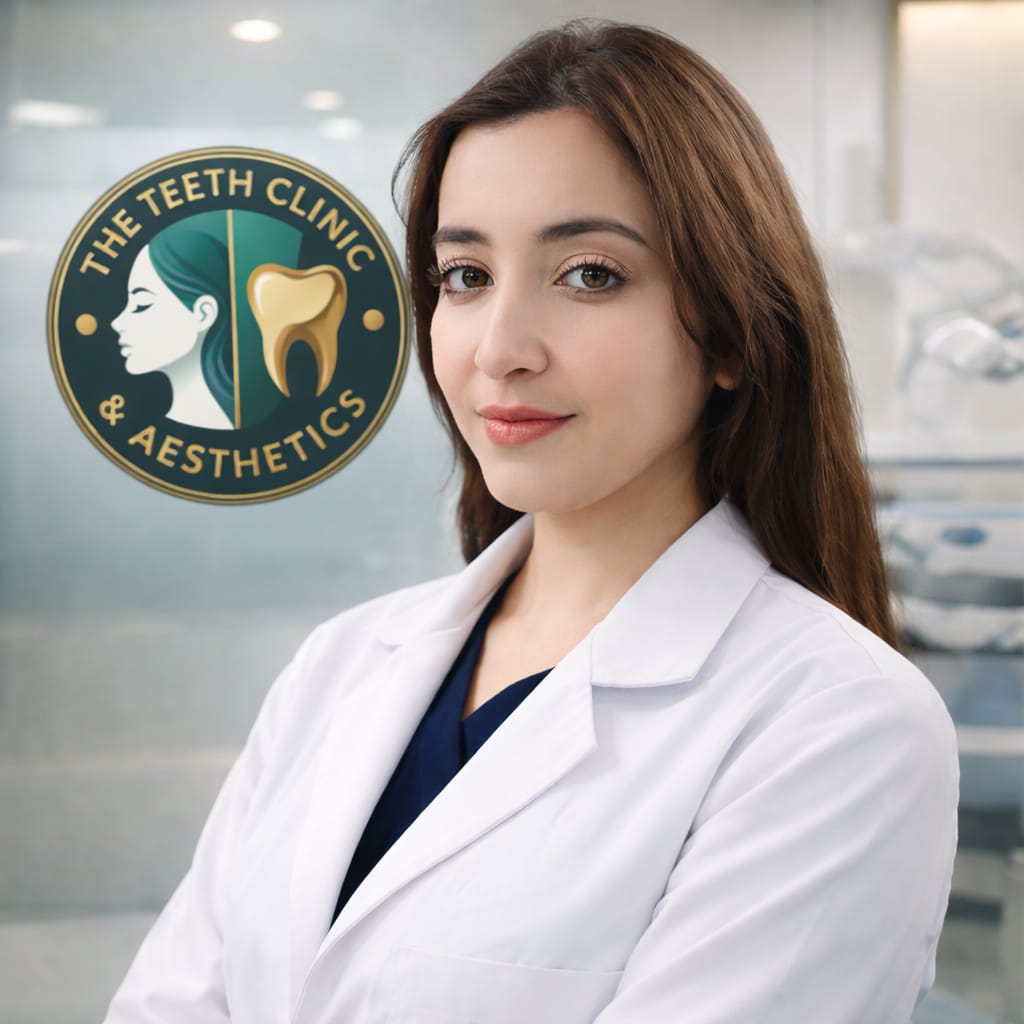
Dr. Afshan Pervez
Lead Dental Surgeon & Aesthetician | BDS, RDS, Orthodontist
Dr. Afshan Pervez is the Lead Dental Surgeon and Aesthetician at The Teeth Clinic, bringing over 14 years of clinical experience in advanced restorative and aesthetic dentistry. Holding a BDS and RDS, she is a versatile specialist with extensive training in Orthodontics, Endodontics, and Surgery, complemented by an Integrated Masters from Portugal and advanced dental education from prestigious institutions in the USA, Hong Kong, and Denmark. Dr. Pervez is a proponent of minimally invasive dentistry, focusing on techniques that preserve natural tooth structure while achieving high-end aesthetic transformations.
Last clinically reviewed: 05/04/2026