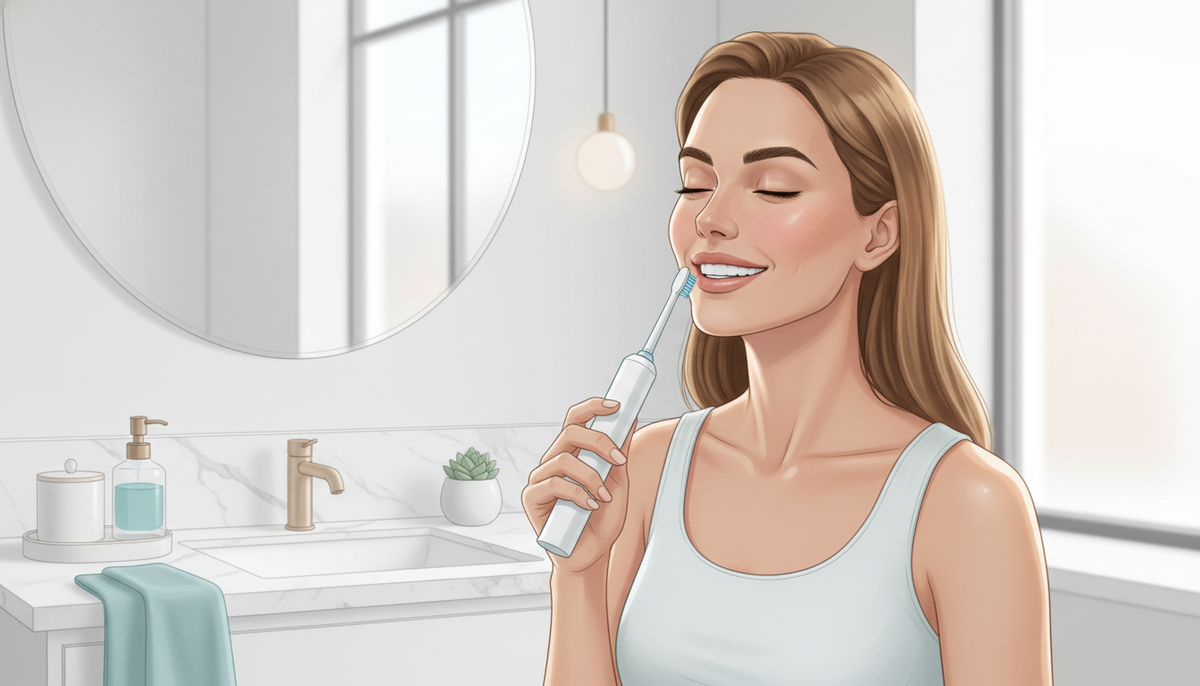
The Quarterly Purge: Why I No Longer Negotiate My Toothbrush Refresh
Direct Answer
For optimal oral hygiene, you should replace your manual toothbrush every 90 days. This frequency ensures the nylon bristles retain the mechanical integrity required to disrupt biofilm effectively. You must replace it sooner—typically every 4 to 6 weeks—if the bristles appear splayed or if you have recently recovered from a contagious illness.
I used to think of personal wellness as a series of grand, sweeping gestures—the grueling hour at the gym, the meticulously weighed meals, or those expensive weekend retreats. But lately, I’ve realized that my longevity is actually hidden in the tiny, boring rituals. Specifically, the one involving that plastic tool I shove in my mouth twice a day. I used to ignore my toothbrush until it looked like a structural disaster. Now, I understand that how often should you replace your manual toothbrush isn't just a casual suggestion; it’s a non-negotiable boundary for my systemic health.
In our practice, we often see patients presenting with localized gingivitis or cervical enamel abrasion who are unaware that their toothbrush is the culprit. We frequently find that when patients use a brush for longer than three months, they subconsciously compensate for the loss of bristle 'flick' by applying excessive manual pressure, which can lead to permanent gingival recession and tooth sensitivity.
— Clinical Observation

I’ve come to view the manual toothbrush not as a permanent bathroom fixture, but as a high-precision instrument. It’s designed to dismantle complex bacterial scaffolding without shredding my gums. When I treat it as an heirloom rather than a consumable, I’m essentially inviting a failing tool to manage my oral microbiome. For me, the ninety-day mark is the hard expiration date. Here is why I’ve stopped pushing my luck.
The Physics of Fraying: My Ninety-Day Limit
It’s easy to dismiss the three-month rule as a marketing scam to sell more plastic. I certainly did. However, when I looked into the science of synthetic polymers, my perspective shifted. Most of the brushes I use rely on nylon filaments. These aren't just hairs; they are engineered with a specific "memory" to flick away plaque. After about 200 sessions—which is roughly where I land at the three-month mark—that memory fails.

I’ve noticed that once the nylon loses its elasticity, the cleaning power vanishes. The bristles stop "snapping" and start dragging. Research confirms my suspicion: the efficiency of plaque removal drops off a cliff after twelve weeks. If I keep using a tired brush, I’m just moving film around my mouth rather than removing it. I’d rather swap the tool than work twice as hard for half the result.
Reading the Bristles: What I Look For
Sometimes, my calendar isn't the only thing telling me to move on. I’ve learned to watch for "the bloom." You know the look—when the bristles stop standing at attention and start splaying outward like a dying flower. When I see this, I know the brush is finished. Splayed bristles are ineffective at plaque removal because they cannot reach the gingival sulcus or interproximal spaces properly, potentially leading to increased plaque accumulation.

I also keep an eye on the tips. When they fray, they lose their factory-polished, rounded ends. The loss of factory-rounded bristle tips creates irregular, sharp edges that may cause minor gingival abrasion. Using a "bloomed" brush feels like trying to clean a window with a handful of gravel. I also lean heavily on those color-indicator bristles. When that blue or green dye starts to fade into a ghostly white, I take it as a silent, neon sign that the filament integrity has collapsed.
My Checklist for Mechanical Fatigue:
- The Splay: Are the bristles leaning away from the center?
- The Texture: Do they feel sharp or abrasive against my tongue?
- The Indicator: Has the color faded past the halfway point?
- The Result: Do my teeth still feel "glassy" after I’m done?
The Invisible War: Why I Fear the Biofilm
Even when my brush looks "clean," I know it’s a lie. My bathroom is a damp, humid ecosystem—hardly the place you want to store a tool you put in your mouth. I’ve become acutely aware that every time I brush, I’m transferring bacteria to those porous bristles. Rinsing it under the tap is a polite gesture, but it doesn't sanitize the deep tufts where the gunk lives.

I think of it as an "invisible biofilm." Over twelve weeks, the base of the bristles becomes a microscopic breeding ground. In a shared bathroom, the stakes are even higher due to aerosolized particles (yes, the "toilet sneeze" is real). By rotating a fresh brush into my routine every quarter, I’m essentially hitting a "reset" button on my bacterial exposure. I don’t want to re-inoculate my mouth with last month's germs.
The Post-Sickness Ritual
I have one strict exception to the ninety-day rule: if I get sick, the brush goes in the trash immediately. Whether it’s a grueling flu or just a lingering head cold, I view my toothbrush as a reservoir for pathogens. I’ve found that holding onto a "sick brush" feels like inviting a relapse. There’s something deeply satisfying—almost spiritual—about tossing that old brush once my fever breaks.

This is my "clean slate" protocol. It’s a psychological break from the illness and a biological necessity to protect my microbiome from Streptococcus or lingering viral loads. It’s a five-dollar investment in making sure I stay healthy once I’ve recovered.
How I Choose My Next Tool
When it’s time to shop, I’ve stopped reaching for the "firm" bristles that feel like a floor scrubber. I’ve learned that "soft" or "extra-soft" is the only way to go. I look for high-density patterns—they feel plush, like a luxury spa treatment for my mouth, and they clean more surface area with less pressure. I’m protecting my enamel, not trying to sand it down.
I also care about the "feel" in my hand. If the handle is flimsy, I can’t reach those back molars effectively. I want something weighted and ergonomic. For me, oral care isn't just a chore anymore; it’s a grooming ritual that should feel as high-end as the rest of my skincare routine.
My Maintenance Strategy
To make sure my brush actually makes it to day ninety in good shape, I’ve adopted a few habits:
- Let it Breathe: I never, ever store my brush in a drawer or a closed cap. Air-drying is the best disinfectant.
- Upright Only: I keep it in a heavy stone holder to ensure the water drains away from the bristles.
- No Touching: I make sure my brush head isn't leaning against anyone else's. Social distancing for toothbrushes.
In the grand theater of health, the timing of a toothbrush replacement is a minor act. But I’ve found that these small, disciplined choices are the ones that actually stick. By respecting the ninety-day cycle, I’m not just buying a piece of plastic; I’m honoring the science of my own well-being. My smile—and my body—deserve a tool that actually works.
Frequently Asked Questions
General
How often should you replace your manual toothbrush?
How often should you replace your manual toothbrush?
You should replace your manual toothbrush every three months, or approximately every 90 days. Research shows that plaque removal efficiency significantly decreases after twelve weeks of use as bristles lose their elasticity.
General
What are the visible signs that I need a new toothbrush?
What are the visible signs that I need a new toothbrush?
Look for 'the bloom,' where bristles splay outward and no longer stand upright. Additionally, if the color-indicator bristles have faded or the tips feel sharp and abrasive rather than smooth, it is time for a replacement.
General
Should I throw away my toothbrush after being sick?
Should I throw away my toothbrush after being sick?
Yes, you should replace your toothbrush immediately after recovering from an illness like the flu or a cold. Toothbrushes can act as reservoirs for pathogens, and replacing it prevents potential re-infection.
General
What happens if I use an old toothbrush for too long?
What happens if I use an old toothbrush for too long?
Using an old toothbrush leads to ineffective plaque removal, which increases the risk of cavities and gum disease. Frayed bristles can also become abrasive, potentially damaging your tooth enamel and irritating your gums.
Key Takeaways
- Adhere to the 90-day replacement rule to maintain the mechanical plaque-removal efficiency of nylon filaments.
- Replace your toothbrush immediately following a bacterial or viral infection to prevent bacterial harbor in the brush head.
- Monitor for 'bristle splay' or fading indicator dyes as objective signs of mechanical fatigue and filament failure.
- Prioritize soft or extra-soft high-density bristles to protect the enamel and gingival tissues from abrasive damage.
- Practice proper storage by keeping the brush upright and uncovered to allow for air-drying, which naturally reduces bacterial load.

Dr. Afshan Pervez
Lead Dental Surgeon & Aesthetician | BDS, RDS, Orthodontist
Dr. Afshan Pervez is the Lead Dental Surgeon and Aesthetician at The Teeth Clinic, with over 14 years of clinical experience. Holding BDS and RDS credentials, she is a specialized Orthodontist whose academic journey includes an Integrated Masters from Portugal and advanced training in Implant Dentistry (Hong Kong), Dental Medicine (USA), and Global Health (Denmark). Her multidisciplinary expertise encompasses surgery, endodontics, prosthodontics, and aesthetic medicine, including advanced PRP and facial treatments.
Last clinically reviewed: 02/04/2026