
Race Against the Clock: Why I Treat Every Second Like a Vital Sign
Direct Answer
You should schedule emergency tooth repair immediately for avulsions, severe fractures, or lost restorations to preserve the tooth's vitality and prevent systemic infection. Seeking care within the "golden hour" significantly increases the chance of successful reimplantation and protects the internal pulp from bacterial invasion that could necessitate more invasive root canal therapy.
In the high-stakes world of aesthetic dentistry, the boundary between a routine check-up and a full-blown catastrophe isn't just thin—it’s governed entirely by the ticking of a clock. I’ve spent years honing my craft, yet nothing resets my adrenaline quite like an acute dental crisis.
In our practice, we often see patients who delay seeking care for minor-looking chips, only to present weeks later with irreversible pulpitis or deep abscesses. These cases highlight that even small structural breaches allow oral bacteria to bypass the enamel’s natural defense, often transforming what could have been a simple bonding procedure into a complex endodontic intervention.
— Clinical Observation

While I adore the quiet, meditative process of sculpting a porcelain veneer, an emergency is visceral. It’s a fight. When a patient walks in with a trauma-shattered smile, I’m not just a clinician; I’m a first responder guarding the literal scaffolding of their face.
When a tooth's structural integrity is breached, the countdown is relentless. I view early intervention as the ultimate preventative weapon. Think about the physics involved: a hairline fracture might look like a minor aesthetic glitch to you, but to me, it is a wide-open door for pathogens to colonize the sensitive internal pulp.

If you are sitting there wondering if your situation is 'serious enough' to disrupt my schedule, let me be clear: it is.
The Sixty-Minute Window: My Tactical Approach to Avulsion
There is nothing quite as jarring as an avulsed tooth—one that has been completely ripped from its socket. Whether it was a stray elbow on the basketball court or a freak trip on the sidewalk, my clinical focus shifts immediately to the 'golden hour.' Within those first sixty minutes, the biological potential for that tooth to reintegrate with your jawbone is at its peak.

Handle the tooth only by the crown, never the root. If possible, gently place it back in the socket. If not, store it in a container of cold milk or a dedicated tooth preservation kit to keep the cells alive until you reach the dentist. Time is of key essence, try to reach a dentist within an hour.

Invisible Fractures: Why I See a Chip as a Breach in the Armor
Not every emergency involves a pool of blood or a gap in your smile. To me, a visible chip or a vertical fracture is an aesthetic emergency that carries a heavy clinical weight. I know it affects your confidence, but I’m more worried about the breach in your enamel. Enamel is the toughest substance your body produces, but once it’s cracked, the soft, vulnerable dentin is exposed to the chaos of the oral environment.

The DIY Disaster: My Warning on Failing Crowns
If you have invested in top-tier crowns or onlays, seeing one come loose is incredibly frustrating. Many people think that if it doesn't hurt, it can wait. I disagree. A tooth that has been prepared for a crown is naked and vulnerable. It’s prone to extreme sensitivity, rapid decay, and can even begin to shift out of place, ruining your alignment in a matter of days. However, there is one absolute rule in my practice: never use household glue to reattach a crown.
Frequently Asked Questions
General
What is the 'golden hour' for a knocked-out tooth?
What is the 'golden hour' for a knocked-out tooth?
The golden hour refers to the first sixty minutes after a tooth is avulsed (knocked out). During this window, the biological potential for the periodontal ligament fibers to reintegrate with the jawbone is at its peak, significantly increasing the chances of saving the natural tooth.
General
Can I use household glue to fix a loose dental crown?
Can I use household glue to fix a loose dental crown?
No, you should never use household glue to reattach a crown. These adhesives contain toxic chemicals not meant for oral use and can damage the underlying tooth structure or make professional reattachment impossible. Contact your dentist immediately for a safe, clinical solution.
General
Is a small chip in my tooth considered a dental emergency?
Is a small chip in my tooth considered a dental emergency?
Yes. While it may seem like a minor aesthetic issue, a chip breaches the protective enamel, exposing the vulnerable dentin to bacteria. This can lead to internal decay and nerve damage if not sealed promptly with professional bonding or a restoration.
General
How should I store a tooth that has been knocked out?
How should I store a tooth that has been knocked out?
Handle the tooth only by the crown, never the root. If possible, gently place it back in the socket. If not, store it in a container of cold milk or a dedicated tooth preservation kit to keep the cells alive until you reach the dentist.
Key Takeaways
- Seek professional dental intervention within 60 minutes for knocked-out teeth to maximize the success rate of reimplantation.
- Handle a knocked-out tooth by the crown only, avoiding any contact with the sensitive root fibers to preserve the periodontal ligament.
- Store a displaced tooth in cold milk or a pH-balanced preservation solution while in transit to the clinic to prevent cell death.
- Never use household adhesives or superglue to reattach crowns, as these chemicals are toxic to dental tissue and can cause permanent damage.
- Treat any visible crack as a clinical priority to prevent oral pathogens from migrating into the soft internal pulp chamber.
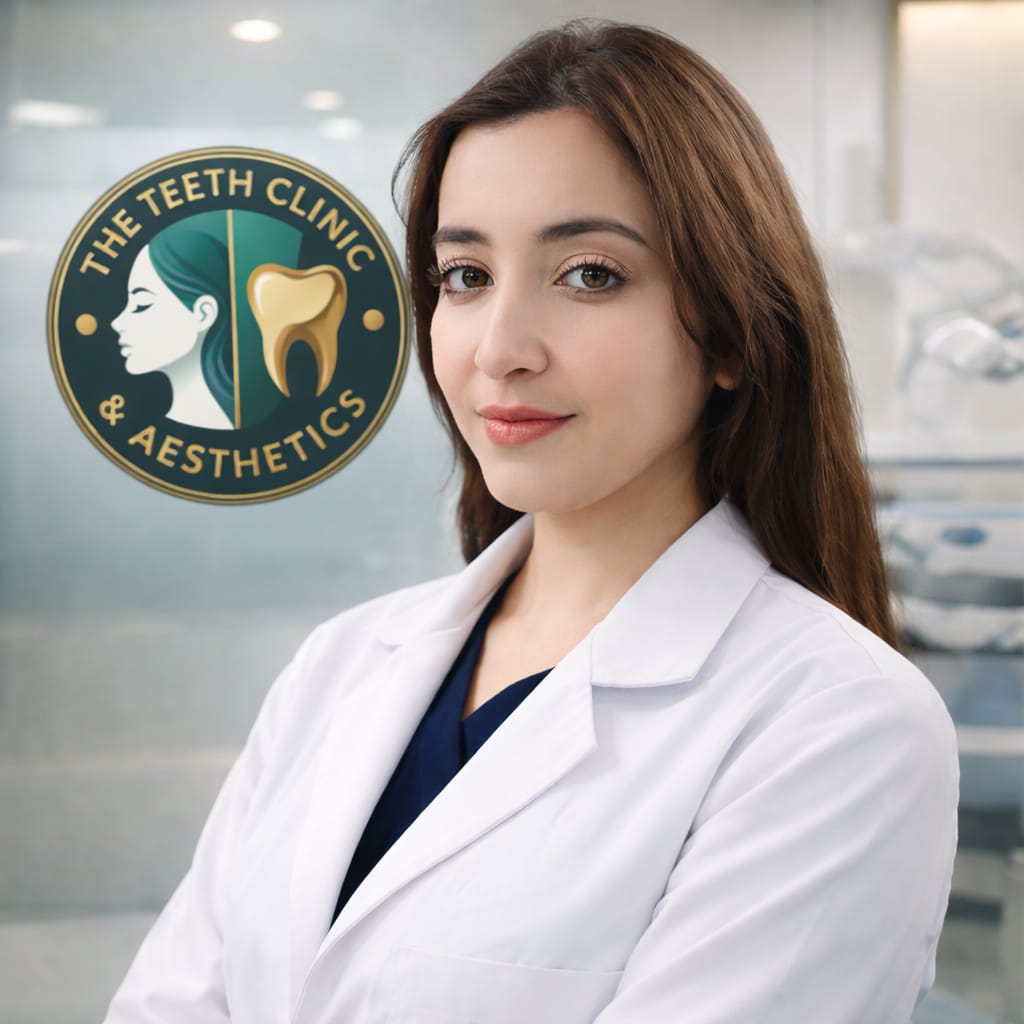
Dr. Afshan Pervez
Lead Dental Surgeon & Aesthetician | BDS, RDS, Orthodontist
Dr. Afshan Pervez is the Lead Dental Surgeon and Aesthetician at The Teeth Clinic, bringing over 14 years of multi-disciplinary experience in surgery, orthodontics, and aesthetic medicine. With advanced credentials including a BDS and RDS, her global education spans an Integrated Masters in Portugal, implant dentistry in Hong Kong, and dental medicine in the USA. She specializes in complex restorative cases and facial aesthetics, combining clinical precision with a commitment to patient-centered emergency care.
Last clinically reviewed: 03/04/2026