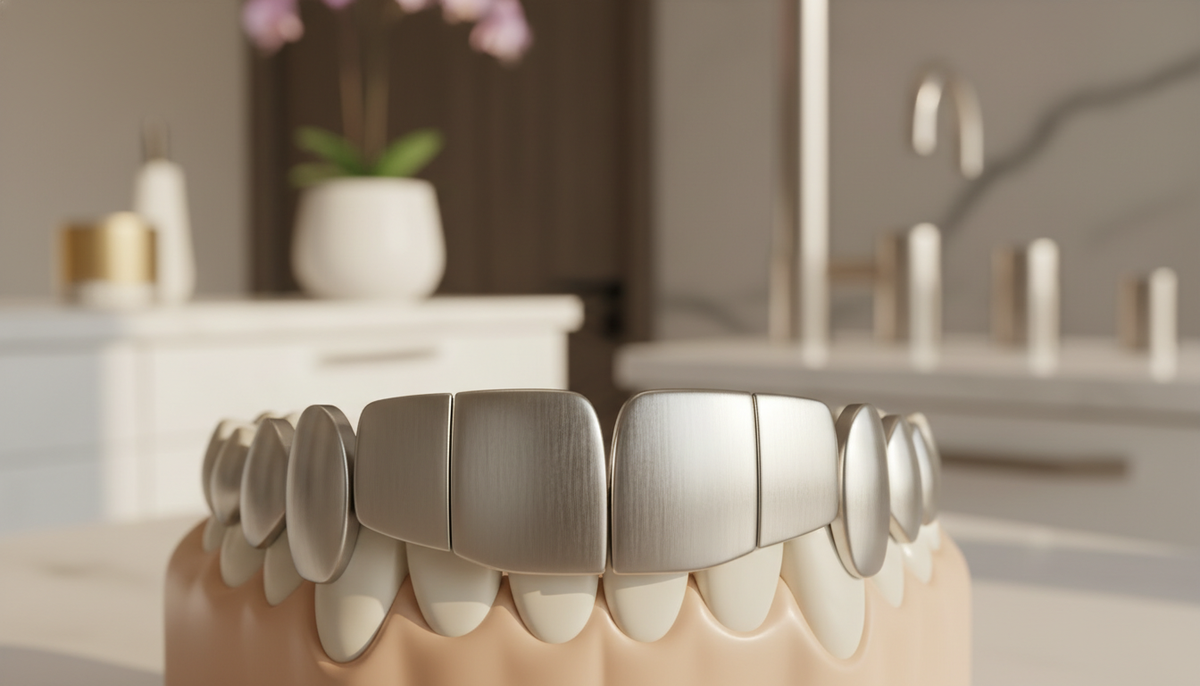
Why I’m Moving My Patients Away from Traditional Elastics
Direct Answer
Self-ligating braces offer significant benefits by replacing traditional elastic ties with a specialized slide mechanism. This innovation reduces friction, leading to more comfortable tooth movement, improved oral hygiene, and often shorter treatment times. Patients benefit from fewer office visits and a more discreet, stain-resistant orthodontic experience compared to legacy metal-and-elastic systems.
For years, I’ve watched teenagers and adults alike walk into my office with a palpable sense of dread. Their minds are stuck in a 1990s time warp: a visceral image of heavy metal, jagged wires, and those neon-colored rubber bands that seemed to act like magnets for spinach and social anxiety. To be honest, that "middle school" aesthetic was a clunky necessity for decades, but I’ve seen how it makes people hesitate to seek the care they deserve. Fortunately, I can tell you that the era of the "one-size-fits-all" metal mouth is over. In my practice, I’ve seen a massive paradigm shift toward precision engineering and a more patient-centric philosophy.
In our practice, we often see patients who previously avoided orthodontics due to the discomfort associated with traditional 'tightening' rituals. By utilizing self-ligating systems, we observe a notable reduction in soft tissue irritation and a significant improvement in gingival health, as the absence of elastic ligatures eliminates primary plaque traps that often cause inflammation.
— Clinical Observation

At the center of this shift is something I find truly fascinating: self-ligating braces. I often describe these to my patients as the high-end, clutter-free version of orthodontics. Traditional systems rely on elastic ties, or "ligatures," to pin the archwire against the bracket. In contrast, self-ligating brackets use a specialized, integrated door mechanism. I often get asked what-is-the-difference-between-a-general-dentist-and-an-orthodontist when patients are exploring these advanced options. I like to think of it as a miniature, sophisticated cabinet door that secures the wire while allowing it to move with a level of fluidity that was previously impossible. This isn't just a minor mechanical tweak; it’s a total reimagining of dental movement.
The Physics of the "Slide": Why Less Force is More
I’m often asked about the "secret sauce" behind this technology. It comes down to one word: friction. In a legacy setup, those tiny rubber bands create a surprising amount of resistance against the archwire. To overcome that friction, I would have to apply more force to actually get the teeth to move. But biology tells me that more force isn't always better. In fact, heavy pressure can be counterproductive, sometimes slowing down root movement and causing unnecessary discomfort to the delicate periodontal tissues. I want to work with the body, not against it.
The "slide" system changes the entire game for me and my patients:
- Low Friction: The wire moves freely, meaning the teeth shift more naturally.
- Biological Harmony: We use gentle, consistent pressure that aligns with the body's natural physiology.
- Consistent Comfort: Because the movement is gradual rather than jerky, the "day-after-adjustment" soreness is significantly reduced.

By lowering the biological resistance, I’ve found that the teeth move with a grace that traditional elastics simply can't match. This is particularly important when considering how-do-malocclusions-affect-temporomandibular-joint-function and overall jaw health. For my patients, this translates to a much more comfortable daily experience. No more feeling like your teeth are being "yanked" into place.
I Value Your Time as Much as You Do
In my world, time is a luxury. I realize that my patients lead incredibly busy lives—whether they are managing a corporate boardroom or a frantic school schedule. One of the reasons I advocate for self-ligating systems is their sheer efficiency. Because the low-friction mechanism allows for freer movement, I’ve seen treatment times drop significantly. While every mouth is a unique biological puzzle, these streamlined mechanics often allow me to shave months off the total time a patient spends in braces.

But efficiency isn’t just about the end date; it’s about the "in-between." Traditional braces require what I call the "tightening ritual"—frequent appointments to replace elastics and manually adjust tension. Self-ligating brackets are different. They are designed to be "self-adjusting" to a certain degree, maintaining a consistent level of force over a longer window. This means I see my patients less often for maintenance, and they spend more time living their lives.
Professional Aesthetics: No More Stained Smiles
I’ve heard it a thousand times: "I’m too old for braces." The aesthetic hurdle is real, especially for my adult patients who fear their professional image will suffer. I address this by pointing out the minimalist, refined design of modern hardware. These brackets have a smaller footprint on the tooth, making them far less intrusive during a conversation or a presentation. I want your smile to be the focus, not your hardware.
Beyond the size, I consider the "stain factor" to be a major win:
- No Porous Elastics: Traditional clear rubber bands are notorious for absorbing coffee, red wine, and mustard.
- Lasting Clarity: Without those ties, your braces don't turn that unsightly yellow or brown between visits.
- Sophisticated Materials: I offer clear or ceramic self-ligating options that blend seamlessly with natural enamel.

I love seeing a patient’s confidence stay high because their braces look just as clean and crisp on day 30 as they did on day one. It’s about maintaining a professional look throughout the entire process.
Hygiene: My Strategy for a Healthier Result
From a clinical perspective, my biggest gripe with traditional elastics is that they act as "plaque traps." They provide a porous, sticky surface where bacteria love to hide. This often leads to the "white spots" (decalcification) or gingivitis that we all want to avoid. I’ve noticed that when I remove the elastic ties from the equation, my patients' oral hygiene improves almost instantly. The smooth, contoured surfaces of self-ligating brackets are simply easier to navigate with a toothbrush and floss. I often recommend learning how-to-properly-use-interdental-brushes-for-tight-spaces to complement this hardware.

I’ve observed that my patients spend less time scrubbing and get better results. It’s not just about convenience; it’s about ensuring that when the braces come off, the teeth underneath are vibrant and healthy. I’m not just aiming for straight teeth; I’m aiming for a healthy periodontal foundation that will last a lifetime.
Redefining the Comfort Threshold
I always strive to be honest: any time you move teeth, there will be some sensation of pressure. However, I’ve seen a massive difference in how my patients describe that sensation with self-ligating hardware. Traditional braces usually involve a "spike" in discomfort right after an adjustment. Because my preferred systems use a more constant, gentle force, that "tight" feeling is much milder and more manageable. It’s a more linear experience rather than a rollercoaster of soreness. Physical irritation is another factor I take seriously. I’ve chosen to work with brackets that feature rounded contours and smooth profiles. Without the "poking" of twisted wire ends or the bulk of rubber ties, there are fewer sharp edges to snag the cheeks or lips.
Why I Believe This is Your Best Investment
When I consult with a new patient, I encourage them to look at their smile as their most prominent asset. Choosing an orthodontic system is an investment in your future self. It's also worth understanding how-long-is-the-retention-phase-in-orthodontic-treatment to protect that investment long-term. When I weigh the cost of premium self-ligating braces against the benefits, the value is clear. You are paying for technology that respects your time, your comfort, and your long-term health. Fewer appointments and shorter treatment times are benefits that far outweigh a small incremental cost difference. Ultimately, my goal is to provide a result that is as functional as it is beautiful. By leveraging advanced engineering, I ensure that the journey to a perfect smile is as sophisticated as the final result itself.
Frequently Asked Questions
General
What are the main benefits of self-ligating braces?
What are the main benefits of self-ligating braces?
Self-ligating braces offer faster treatment times, increased comfort due to lower friction, and better oral hygiene since they lack elastic ties that trap plaque.
General
Do self-ligating braces hurt more than traditional ones?
Do self-ligating braces hurt more than traditional ones?
No, they typically hurt less. They use a gentle, constant force rather than the periodic tightening spikes associated with traditional elastic-tie braces.
General
Are self-ligating braces more expensive?
Are self-ligating braces more expensive?
While the initial investment may be slightly higher due to the advanced technology, the value is found in fewer appointments, shorter overall treatment time, and better long-term dental health.
General
Can I get clear self-ligating braces?
Can I get clear self-ligating braces?
Yes, ceramic or clear self-ligating options are available, providing a highly aesthetic and professional look that resists staining better than traditional clear elastics.
Key Takeaways
- Self-ligating braces use a built-in sliding door mechanism instead of elastic bands, significantly reducing friction.
- Patients typically experience less discomfort and fewer 'tightening' appointments due to the consistent, gentle force applied.
- Improved oral hygiene is a major benefit, as the absence of porous elastics reduces plaque accumulation and prevents hardware staining.
- Modern self-ligating designs are more discreet and aesthetically pleasing, making them an excellent choice for professional adults.
Dr. Afshan Pervez
Lead Dental Surgeon & Aesthetician | BDS, RDS, Orthodontist
Dr. Afshan Pervez is the Lead Dental Surgeon & Aesthetician at The Teeth Clinic with over 14 years of clinical experience. A BDS and RDS qualified Orthodontist, she holds advanced credentials from prestigious institutions in Portugal, Hong Kong, and the USA. Her extensive expertise spans Surgery, Endodontics, and Aesthetic Medicine, where she focuses on integrating advanced dental technology with patient-centric care.
Last clinically reviewed: 05/04/2026