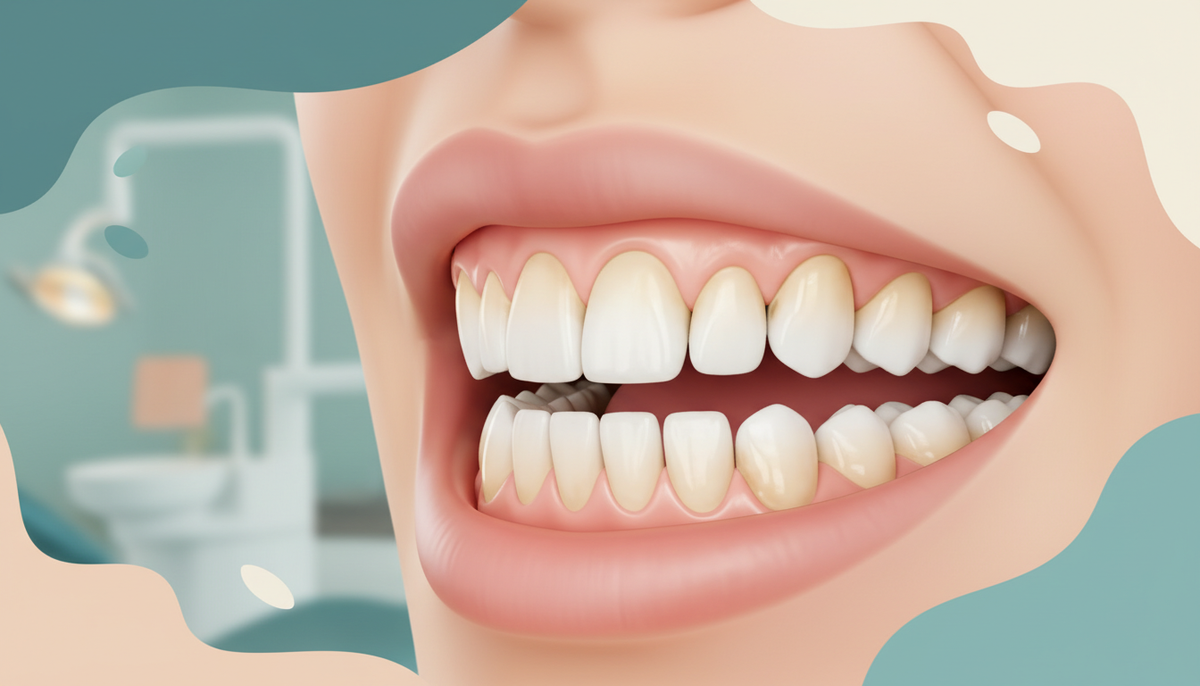
The Lingual Mystery: Why Stains Hide Behind Your Smile
Direct Answer
Dark black stains on the inside of teeth, specifically on the lingual surfaces of lower incisors, are usually caused by mineralized plaque (calculus) that has absorbed pigments from tobacco, coffee, or tannins. Other causes include chromogenic bacteria, which produce dark iron-sulfide precipitates, and the long-term use of antimicrobial mouthwashes containing chlorhexidine.
Discovery often happens by accident. You might be flossing or perhaps catching a glimpse of your lower arch in a magnifying mirror when you notice it: a dark, stubborn line or a series of black spots hugging the interior base of your teeth. This area, known in clinical terms as the lingual surface, is the "backstage" of your mouth. While the front-facing enamel receives the brunt of our aesthetic attention, the lingual side remains a secluded environment where biological processes occur largely undisturbed.
In our practice, we often see patients who are distressed by these dark lines despite having excellent brushing habits. We find that these 'Black Stains' are frequently tied to a patient's unique salivary chemistry and high mineral content. For those concerned with the aesthetic impact, we treat these cases not just as a cleaning task, but as a part of a comprehensive aesthetic protocol. This involves using Guided Biofilm Therapy to preserve the enamel's natural luster while ensuring the gingival health is optimized, occasionally incorporating regenerative approaches like PRP to maintain the integrity of the gum margin where these stains typically settle.
— Clinical Observation

The interior of the lower front teeth is particularly prone to these deposits due to its proximity to the major salivary glands. The sublingual and submandibular glands sit directly beneath the tongue, constantly bathing the back of the lower incisors in a fresh supply of saliva. While saliva is essential for remineralization and neutralizing acids, it is also rich in calcium and phosphate. When these minerals meet the biofilm—the thin layer of bacteria that naturally resides on your teeth—they can cause the film to harden into calculus, or tartar, at an accelerated rate. Because this area is tucked away, it acts as a natural reservoir where pigments from our diet and environment can settle and become trapped within the mineralized structure. Knowing how to remove plaque from teeth safely before it mineralizes is key to preventing these stubborn marks.
Chromogenic Bacteria: The Biological Origin of Black Lines

Not all dental stains are created by what we eat. In a significant number of cases, the culprit is entirely biological. We often encounter patients who maintain impeccable oral hygiene—brushing and flossing religiously—yet still develop a thin, dark line along the gingival margin. This is frequently the work of chromogenic bacteria, specifically species like Actinomyces. These bacteria produce metabolic by-products that react with the iron present in your saliva or gingival crevicular fluid, resulting in a dark, iron-sulfide precipitate that adheres firmly to the enamel.
Dr. Pervez often explains to patients that this "Black Stain" is unique because it is not necessarily a sign of poor hygiene. In fact, it is often a reflection of a specific oral chemistry. Some clinical studies suggest a potential correlation between chromogenic staining and a lower incidence of caries, though this does not replace the need for regular check-ups to monitor for decay. Understanding the difference between gingivitis and periodontitis is also helpful here, as the health of the gum margin dictates how these bacteria colonize.
Lifestyle Catalysts: From Artisanal Coffee to Therapeutic Rinses

While biology plays a massive role, our lifestyle choices act as the catalysts that darken the "lingual mystery." The modern palate has a penchant for tannins—complex chemical compounds found in high-end teas, dark coffees, and red wines. These tannins have a high affinity for the dental pellicle, the protein film that covers your teeth. Once the tannins bind to the pellicle, they create a dark, yellowish-to-black hue that is particularly prominent on the porous surfaces of lingual calculus.
There is also a clinical irony we frequently observe: the "Chlorhexidine footprint." Chlorhexidine is a powerful, gold-standard antimicrobial mouthwash often prescribed after periodontal surgery or to treat gingivitis. While it is incredibly effective at killing harmful bacteria, it has a notorious side effect. It reacts with dietary chromogens—the pigments in your food—to create dark brown or black stains on the teeth and tongue.
Distinguishing Calculus from Caries

One of the most critical aspects of a clinical evaluation is the differentiation between hardened tartar (calculus) and active decay (caries). To the untrained eye, a black spot on the back of a tooth is simply "a hole." However, Dr. Pervez utilizes a combination of tactile sensation, visual magnification, and diagnostic imaging to determine the true nature of the mark. Calculus is an accumulation of material on top of the tooth; caries is the degradation of the tooth itself. If decay is present, patients often have to choose between white fillings vs silver amalgam to restore the structure.
Advanced Clinical Removal: Precision and Preservation
When it comes to removing these dark lingual stains, we have moved far beyond the aggressive hand-scraping of the past. Traditional scaling is still necessary for heavy deposits, but for the fine, dark lines caused by chromogenic bacteria or tannins, we utilize precision technology that preserves the integrity of the enamel. Ultrasonic scaling uses high-frequency vibrations to shatter the bond between the stain and the tooth, effectively "shaking" the calculus loose without the need for excessive manual pressure.

For more stubborn, integrated staining, we often turn to Air-Flow technology. This system uses a controlled stream of air, warmed water, and fine powder to gently "power-wash" the tooth. This is particularly effective for the lingual surfaces and the tight spaces between teeth where traditional instruments might struggle. Professional removal is generally necessary for mineralized calculus, though consistent preventive hygiene can mitigate the initial accumulation of biofilm.
Frequently Asked Questions
General
Are black stains on the inside of my teeth always cavities?
Are black stains on the inside of my teeth always cavities?
No. While black spots can indicate decay, they are frequently extrinsic stains caused by chromogenic bacteria, tannins from food, or mineralized tartar (calculus) that has absorbed pigments.
General
What are chromogenic bacteria?
What are chromogenic bacteria?
Chromogenic bacteria, such as Actinomyces, produce metabolic by-products that react with iron in saliva. This creates a dark, iron-sulfide precipitate that forms a thin black line along the gum margin.
General
Can I remove black dental stains at home with whitening strips?
Can I remove black dental stains at home with whitening strips?
Generally, no. These stains are often mineralized or chemically bonded to the tooth surface. Professional treatments like ultrasonic scaling or Air-Flow technology are required for safe removal.
General
Why do black stains often appear on the back of lower front teeth?
Why do black stains often appear on the back of lower front teeth?
This area is near major salivary glands. The high mineral content in saliva can cause plaque to harden into tartar quickly, which then traps dark pigments from coffee, tea, or tobacco.
Key Takeaways
- Lingual stains are often caused by the mineralization of plaque into calculus, which then traps dietary pigments.
- Chromogenic bacteria, specifically Actinomyces, can create dark lines near the gums even in patients with good oral hygiene.
- Tannins from coffee and tea, as well as chlorhexidine mouthwashes, are major lifestyle catalysts for dark tooth staining.
- It is vital to distinguish between calculus (buildup on the tooth) and caries (actual decay of the tooth structure).
- Modern removal techniques like ultrasonic scaling and Air-Flow technology offer a safe and painless way to eliminate deep staining.
Dr. Afshan Pervez
Lead Dental Surgeon & Aesthetician | BDS, RDS, Orthodontist
Dr. Afshan Pervez is the Lead Dental Surgeon and Aesthetician at The Teeth Clinic, bringing over 14 years of international experience. She holds BDS and RDS credentials and is a specialist Orthodontist. Her extensive education includes an Integrated Masters from Portugal and advanced training in Dental Medicine and Implant Dentistry from the USA and Hong Kong. Dr. Pervez specializes in a wide array of disciplines, including Oral Surgery, Endodontics, and Aesthetic Medicine, where she integrates dental health with advanced facial treatments such as PRP.
Last clinically reviewed: 07/04/2026