
My Clinical Shift: From Aggressive Peeling to Cellular Whispering
Direct Answer
Peptides are short-chain amino acids that function as cellular messengers, signaling the skin to synthesize essential proteins like collagen and elastin. Unlike aggressive resurfacing agents, peptides offer a non-irritating clinical approach to rebuilding the dermal scaffold, improving skin resilience, and reducing the appearance of fine lines by mimicking the body's natural repair signals.
I’ve spent the better part of my career watching the pendulum of aesthetic medicine swing. A decade ago, we were obsessed with the "scorched earth" approach—laser resurfacing and deep chemical peels that essentially stripped the canvas bare to force a reset. But lately, my conversations in the exam room have changed. I’m no longer just talking about destruction; I’m talking about communication.
In our practice, we often see patients who present with 'Retinoid Dermatitis' or chronic inflammation from over-exfoliation, which compromises the skin’s barrier function. We have observed that integrating biomimetic peptides into their regimen serves as a necessary architectural 'reset,' allowing the skin to regain its structural integrity without the inflammatory response triggered by Vitamin A. This transition from aggressive peeling to cellular signaling is particularly effective for our patients with thinner, mature skin who require a 'snappy' resilience rather than just surface smoothness.
— Clinical Observation

I’ve realized that the most profound transformations don't come from traumatizing the surface, but from mastering the language of peptides. These tiny amino acid sequences are the shorthand of the cellular world, and frankly, they are the smartest tools I have in my kit for long-term skin vitality.
The Telegram Analogy: How I Explain Peptides to My Patients
When patients ask me what a peptide actually is, I tell them to imagine their skin as a bustling construction site that has lost its foreman. Peptides are the telegrams that get the work started again. Technically, they are just short chains of amino acids—the "broken shards" of proteins like collagen. When your natural collagen shatters due to UV exposure or simple chronological aging, these fragments float around. I find it fascinating that our bodies evolved to recognize these fragments as distress signals. Their presence alone shouts, "Repair is needed here!"
In my clinical practice, I use topical peptides to perform a sort of biological heist. We apply these synthetic fragments to "trick" the skin into a state of high-alert repair. I’m essentially whispering to the fibroblasts—those sleepy cells responsible for our structural bounce—and telling them that it’s time to synthesize new protein. It is a metabolic nudge rather than a mechanical shove. It’s elegant, it’s precise, and it works without the localized trauma of a wound.
The Categories I Look For
- Signal Peptides: These are my workhorses. I look for these to trigger the production of collagen, elastin, and the structural proteins that keep skin from looking like "crepe paper."
- Neurotransmitter-Inhibitors: I often call these "Botox-adjacent" in a topical sense. They don't paralyze the muscle, but they dampen the signal that tells your face to squint or furrow. For my patients who want to extend the life of their injections, these are non-negotiable.
- Carrier Peptides: I view these as the delivery trucks. They ferry trace elements like copper into the cell, which is vital for enzymatic processes and wound healing.
The Dermal Matrix: More Than Just "Firmness"
I often see the dermal matrix described in overly simplistic terms, but I view it as a complex architectural tessellation. You have Type I collagen for strength and Type III for that "youthful squish." When I prescribe a peptide regimen, I’m looking to rebuild the entire scaffold. It isn't just about filling a wrinkle; it's about increasing the actual thickness of the dermis. I’ve seen skin that was once translucent and fragile become resilient and "snappy" again. That is the power of elastin. If collagen is the brick, elastin is the spring. I focus heavily on peptides that target the assembly of these elastic fibers, particularly around the jawline where gravity is least forgiving.

My Personal Stance: The Peptide vs. Retinol Dialectic
I get asked this every single day: "Can I just use Retinol instead?" My answer is usually a nuanced "No." In my experience, Retinol is the drill sergeant—it’s loud, it’s demanding, and it forces a rapid turnover of cells. But not every skin type can handle a drill sergeant. I see so many patients with "Retinoid Dermatitis"—red, peeling, angry skin that has been pushed too far. Peptides, by contrast, are the architects. They provide the blueprints and the materials without the shouting match.
In my own routine, I don't choose. I synthesize. I find that peptides are the perfect buffer for Vitamin A. When I layer them together, the peptides fortify the skin barrier, making the Retinol more tolerable. It’s a "good cop, bad cop" dynamic that addresses aging from two entirely different biological directions. One clears the debris; the other rebuilds the structure.
Copper Peptides: The Blue Gold of Clinical Care
If I had to pick one variant that has truly stood the test of time in my clinical observations, it’s GHK-Cu, or Copper Peptides. I’m continually impressed by their ability to manage inflammation. They have this unique capacity for tissue remodeling that goes beyond simple "anti-aging." I often recommend them for my patients who have spent a bit too much time in the sun over the years. They don't just smooth; they repair the "quality" of the tissue. There’s a visible clarity and a reduction in redness that I rarely see with other ingredients.

The Physics of Penetration: Why I’m Picky About Formulations
Here is a trade secret: most peptide creams on the drugstore shelf are useless. I say this because peptides are notoriously large and incredibly fragile. Getting a peptide past the skin’s lipid barrier is like trying to shove a bowling ball through a keyhole. It requires sophisticated engineering. This is why I always tell my patients that if a peptide serum is suspiciously cheap, the delivery system is likely non-existent.
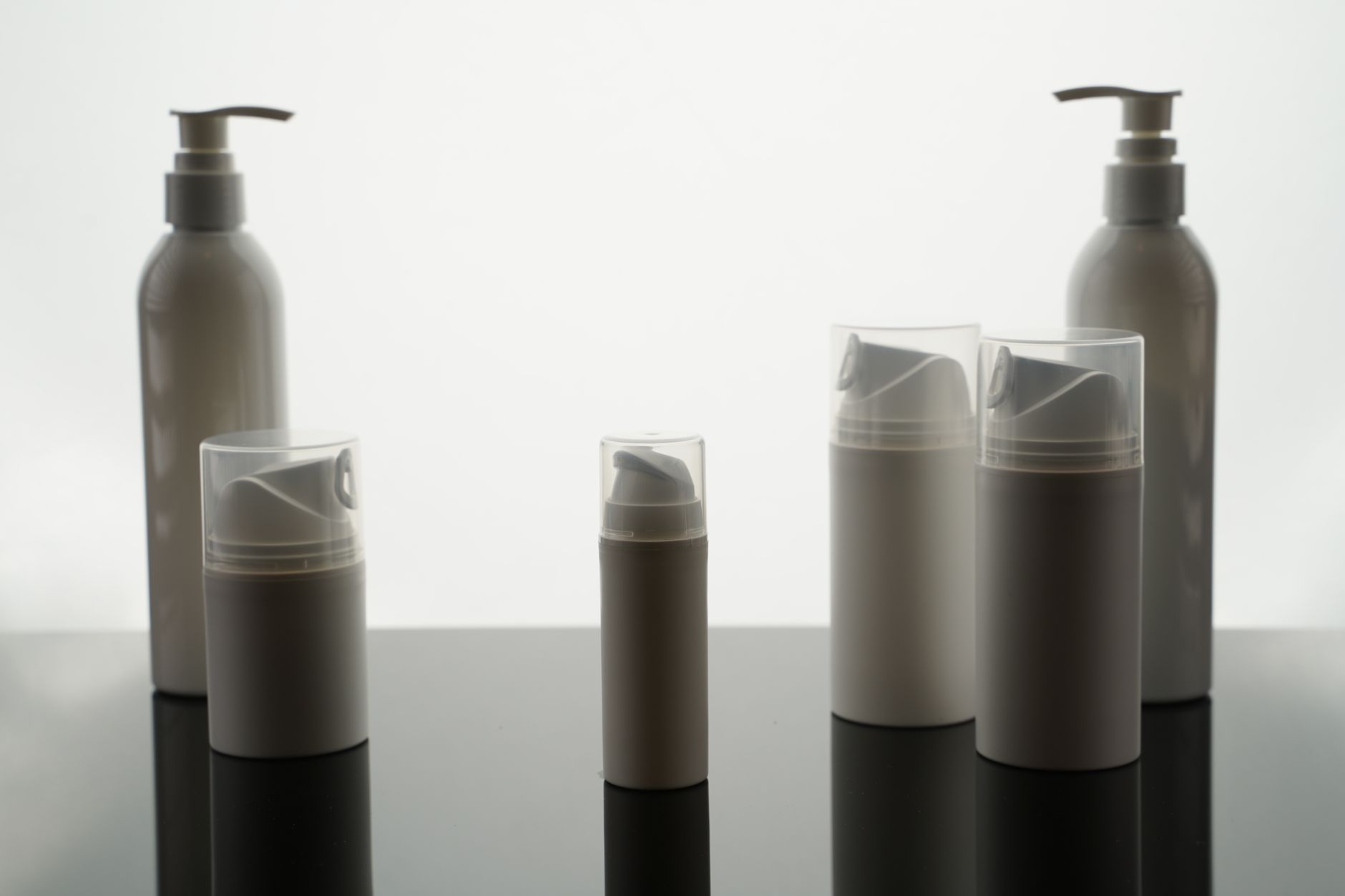
I look for "Palmitoylated" peptides—these have a fatty acid tail attached to them that allows them to slip through the skin's oily defenses. I also insist on airless pumps. If your peptide cream is in a jar that you dip your fingers into every morning, the oxygen and light are likely degrading those delicate amino acid chains before they ever hit your face. Precision in packaging is just as important as the chemistry inside.
Post-Procedure: When the Barrier is Down
One of my favorite ways to utilize peptides is in the immediate aftermath of a clinical procedure. When I perform microneedling or a fractional laser treatment, I have created thousands of microscopic channels in the skin. This is the "golden hour" for peptides. With the barrier temporarily bypassed, these signalers can reach the fibroblasts directly. In clinical observations, we have noted that applying high-load peptide serums post-treatment significantly supports the skin's natural repair process and reduces visible downtime. It turns a "damage-control" situation into a "growth-stimulation" event.

How I Recommend You Layer Your Ritual
To get the most out of these molecules, you have to be strategic. I tell my patients to follow these three rules:
- Damp Skin Only: I want the skin slightly hydrated to facilitate movement. Apply your peptide serum immediately after a gentle cleanse.
- The pH Conflict: This is a big one. I never allow my patients to mix peptides with strong acids (like a 10% Glycolic) or unstable Vitamin C (L-Ascorbic Acid) in the same layer. The acidity can actually break the peptide bonds, rendering them expensive "nothing" on your skin. Use your acids at night and your peptides in the morning.
- The 12-Week Rule: Peptides are not an "instant fix" like a physical scrub. You are changing cellular behavior. I tell everyone: do not judge the product until you have used it for three months. That is the timeline for new collagen to actually reach the surface.
I truly believe that the future of skincare isn't found in more "aggressive" acids or deeper "burns." It's found in the intelligence of the formula. By using peptides, I’m not just masking the passage of time for my patients; I’m helping their skin remember how to behave when it was at its most resilient. It’s a long game, but in my clinical opinion, it’s the only game worth playing.
Key Takeaways
- Peptides function as cellular telegrams that 'trick' the skin into a state of high-alert repair and protein synthesis.
- Different peptide categories—signal, neurotransmitter-inhibitor, and carrier—target specific concerns from collagen production to fine-line reduction.
- Formulation stability is vital; look for palmitoylated peptides in airless pump packaging to ensure the ingredients can penetrate the lipid barrier.
- Peptides are an ideal non-irritating alternative or buffer for retinoids, helping to fortify the skin barrier while managing aging.
- A minimum 12-week commitment is required to see visible results, as this aligns with the biological timeline of new collagen reaching the surface.
Dr. Afshan Pervez
Lead Dental Surgeon & Aesthetician | BDS, RDS, Orthodontist
Dr. Afshan Pervez is the Lead Dental Surgeon and Aesthetician at The Teeth Clinic with over 14 years of clinical experience. Holding credentials including BDS and RDS, she is a specialist in Orthodontics, Surgery, and Aesthetic Medicine. Her extensive global education includes an Integrated Masters from Portugal and advanced training in Dental Medicine in the USA and Global Health in Denmark. Dr. Pervez specializes in advanced aesthetic procedures, including PRP and facial treatments, bridging the gap between clinical surgery and non-invasive aesthetic excellence.
Last clinically reviewed: 05/04/2026