
Beyond the Bilateral: Why I Champion the Cantilever Bridge
Direct Answer
A dental cantilever bridge is a restorative solution used to replace a missing tooth by anchoring a prosthetic tooth (pontic) to only one adjacent natural tooth. It is typically used in the aesthetic zone—the front of the mouth—where biting forces are lower, allowing clinicians to preserve the enamel of other healthy neighboring teeth.
I often tell my patients that restorative dentistry is less about "filling holes" and more about architectural preservation. When I look at a gap in a smile, I am not just seeing a missing piece; I am analyzing the structural integrity and the future health of the entire oral landscape. This is where the dental cantilever bridge becomes my preferred surgical "secret weapon." Unlike the standard bridge that anchors onto teeth on both sides—essentially holding hands across a gap—the cantilever is a bold, singular connection. It is a sophisticated pivot from the status quo.
In our practice, we often see patients who are hesitant to undergo traditional bridge procedures because they do not want to sacrifice the healthy enamel of two adjacent teeth. For these individuals, the cantilever bridge serves as a conservative 'secret weapon,' particularly for missing lateral incisors, as it minimizes biological alteration while providing a stable, aesthetic result that mimics natural tooth emergence from the gumline.
— Clinical Observation
Think of it like a sleek, modern balcony jutting out over a cityscape or a diving board poised over a pool. I find the physics here fascinating. By supporting the prosthetic on just one side, I can bypass the need to drill into a second, potentially pristine tooth. This solution was born from a clinical desire to be as non-invasive as possible. In my practice, the evolution of the cantilever bridge reflects a broader shift toward conservative aesthetics. With today's high-performance bonding agents, what used to be a "niche" fix has become a primary choice for patients who value their natural enamel.
The Anatomy of Choice: Who Do I Recommend This For?
I don’t prescribe cantilever designs lightly. They are precision instruments, not universal fixes. When I am evaluating a patient’s candidacy, I focus almost exclusively on the "aesthetic zone"—the incisors and canines. Why? Because the back of the mouth is a demolition zone of crushing, vertical forces. I have seen what happens when a cantilever tries to survive a molar’s workload; the torque is simply too aggressive. But in the front? That is where the engineering truly shines.

The success of this restoration rests entirely on the shoulders of the "anchor" tooth. During my clinical assessment, I look for three non-negotiables:
- Root Foundation: I need to see a deep, robust root system with a high bone-to-root ratio. The anchor must be a pillar of strength.
- Periodontal Integrity: If there is even a whisper of gum disease or tooth mobility, I will not proceed. Stability is my absolute priority.
- Occlusal Harmony: I meticulously map how the teeth meet. If the patient’s bite exerts a "tipping" force on the floating tooth, the bridge will eventually fail.
In certain scenarios, I find the cantilever to be the only elegant solution. For example, if a patient is missing a lateral incisor and the adjacent central incisor is a masterpiece of natural enamel or expensive veneer work, I refuse to touch it. A cantilever bridge allows me to anchor to the canine instead, leaving the "star" of the smile completely undisturbed.
The Minimalist Ethos: Saving What Is Sacred
In my professional philosophy, natural enamel is a finite, precious resource. To place a traditional bridge, I must "prep"—a clinical euphemism for grinding down—two healthy teeth. If those teeth are free of decay, that feels like a heavy price for a patient to pay. The cantilever bridge allows me to cut that biological "tax" in half. I only have to alter one tooth. This minimalist approach is the cornerstone of modern wellness; we no longer believe in aggressive intervention when a lighter touch yields a superior result.

Beyond the physical preservation, I notice a significant psychological relief in my patients. There is less anxiety when a treatment plan prioritizes the longevity of their natural structure. It feels less like an "overhaul" and more like a precise refinement. To me, luxury in dentistry is defined by the ability to achieve a perfect, functional result with the most conservative path possible.
Engineering Resilience Against the Lever Effect
The "crowbar" effect is the ghost that haunts every cantilever design. When you bite down on the floating tooth (the pontic), it naturally wants to act as a lever, twisting the anchor tooth. I counteract this through advanced material science and strategic design. I am currently a proponent of using high-translucency zirconia or lithium disilicate. These materials provide the structural stiffness of a skyscraper while maintaining the delicate light-play of a natural tooth.

Zirconia, in particular, offers the incredible rigidity needed to resist the bending forces inherent in a one-sided design. Because these materials are so strong, I can keep the bridge thin, which means I have to remove even less of the natural tooth during preparation. It is a win-win for the physics of the mouth and the health of the patient.
From Scan to Smile: My Clinical Protocol
I have completely ditched the "goopy" impressions of the past. My process begins with high-definition digital 3D scans that allow me to map the oral cavity with sub-millimeter accuracy. Once the anchor tooth is gently reshaped, I fit the patient with a temporary bridge. I consider this phase a "test drive." I want the patient to live with the shape, feel how it interacts with their lip, and provide feedback on the aesthetics before we commit to the final ceramic.

The final appointment is where the transformation culminates. I remove the temporary and meticulously condition the surface of the anchor tooth. Using high-strength resin cements and specialized curing lights, I bond the bridge in place. This isn't just a mechanical fit; it is a chemical integration. The bridge becomes a durable, long-term extension of your smile, though its longevity depends on consistent oral hygiene and regular clinical check-ups.
The Invisible Art: Capturing Light and Soul
I believe a successful dental restoration should be invisible to the naked eye. In the aesthetic zone, I work closely with master technicians to ensure the bridge isn't just "white," but polychromatic. Natural teeth have gradients, translucent edges, and a specific way they absorb and scatter light. If a bridge looks like a solid block of color, it has failed the test of artistry.
Furthermore, I pay extreme attention to how the floating tooth interacts with the gum line. I want the pontic to appear as if it is "emerging" from the tissue, rather than just sitting on top of it. This prevents the dark shadows or "black triangles" that can ruin an otherwise beautiful smile. It is this obsessive attention to detail that separates a standard procedure from a life-changing transformation.
A Shared Vow: Longevity Through Ritual
I am always honest with my patients: once this bridge is placed, we are partners in its survival. While the engineering is sound, the biological environment is dynamic. Regular hygiene appointments and meticulous home care—specifically using interdental brushes for tight spaces—are non-negotiable. We must also monitor for signs of gingivitis or periodontitis around the anchor tooth to ensure the foundation remains rock-solid for decades to come.
Frequently Asked Questions
General
What is a dental cantilever bridge?
What is a dental cantilever bridge?
A dental cantilever bridge is a restorative solution used to replace a missing tooth by anchoring the prosthetic (pontic) to only one adjacent natural tooth, rather than two. It acts like a 'diving board' design, making it a more conservative option that preserves natural enamel.
General
When is a cantilever bridge recommended?
When is a cantilever bridge recommended?
It is primarily recommended for the 'aesthetic zone'—the front teeth (incisors and canines). It is ideal when the adjacent tooth is healthy and strong, but the dentist wants to avoid drilling into a second healthy tooth on the other side of the gap.
General
What are the benefits of a cantilever bridge over a traditional bridge?
What are the benefits of a cantilever bridge over a traditional bridge?
The main benefit is the preservation of natural tooth structure. A traditional bridge requires 'prepping' or grinding down two healthy teeth, whereas a cantilever bridge only requires the preparation of one anchor tooth, effectively halving the biological impact.
General
What materials are used for modern cantilever bridges?
What materials are used for modern cantilever bridges?
Modern cantilever bridges typically use high-performance materials like high-translucency zirconia or lithium disilicate. These materials offer the necessary structural rigidity to resist biting forces while mimicking the natural light-play of real teeth.
Key Takeaways
- Cantilever bridges require only one anchor tooth, preserving more of the patient's natural tooth structure compared to traditional bridges.
- This restoration is primarily recommended for the front teeth (incisors and canines) where vertical crushing forces are significantly lower than in the molar region.
- Success depends on a robust 'anchor' tooth with a strong root foundation and a healthy periodontal environment free of gum disease.
- Modern ceramic materials like lithium disilicate and zirconia provide the necessary rigidity and light-scattering properties for a natural-looking finish.
- Long-term success requires a partnership between the dentist and patient, involving rigorous interdental cleaning and regular professional maintenance.
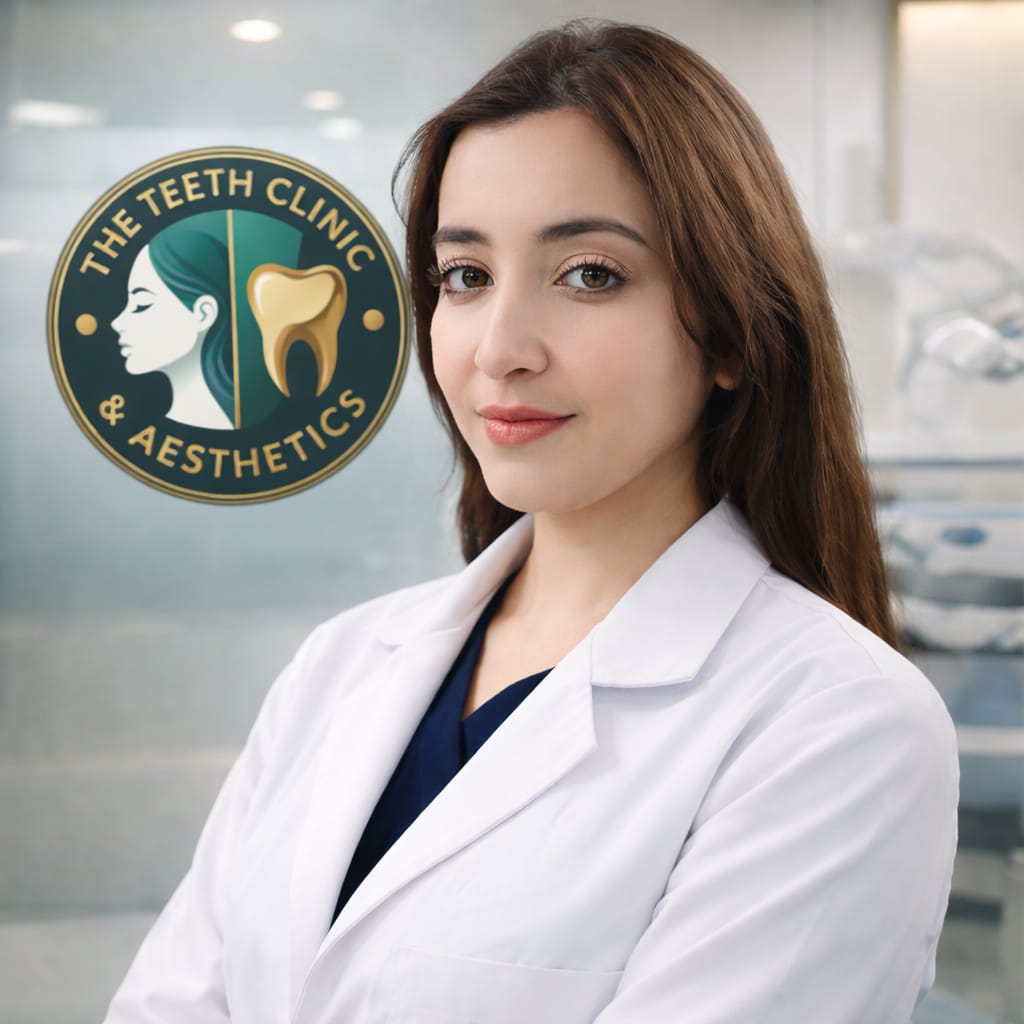
Dr. Afshan Pervez
Lead Dental Surgeon & Aesthetician | BDS, RDS, Orthodontist
Dr. Afshan Pervez is the Lead Dental Surgeon and Aesthetician at The Teeth Clinic, bringing over 14 years of expertise to her practice. A BDS and RDS qualified Orthodontist, she has completed advanced international training in Dental Medicine (USA), Implant Dentistry (Hong Kong), and Global Health (Denmark). Dr. Pervez specializes in complex restorative surgery, prosthodontics, and aesthetic medicine, advocating for a conservative, minimalist approach to modern dentistry.
Last clinically reviewed: 05/04/2026