The Invisible Enemy: My Clinical and Aesthetic Guide to Managing Cold Sore Blisters
I’ve always felt that a cold sore is less of a minor medical hiccup and more of a calculated betrayal by one’s own nervous system. One minute I’m prepping for a high-stakes presentation or a long-awaited social gala, and the next, I feel that subterranean, rhythmic thrumming on the edge of my lip. It’s an aesthetic ambush.

These lesions—gifted to us by the Herpes Simplex Virus Type 1 (HSV-1)—simply do not care about your calendar. Over the years, I’ve refined a protocol that balances clinical-grade efficacy with the absolute necessity of maintaining one's appearance. If you want to know how to safely treat a cold sore blister on the lip without looking like a medical curiosity, you have to be aggressive, early, and incredibly disciplined.
The Ghost Itch: Why I Never Ignore the Prodrome
In my experience, the battle is won or lost in the first four hours. I call it the "ghost itch"—that specific, localized tingling or burning sensation that precedes any visible mark. This is the virus literally traveling down your nerve path to the surface. I’ve learned that if I can intervene during this pulsing stage, I can often stop the blister from even breaking the skin. It’s about interrupting the viral replication before it creates a "weeping" disaster.
My immediate "code red" response involves two things. First, I grab a clean ice pack. I hold it to the spot for ten minutes on, ten minutes off. Why? Because the cold constricts the blood vessels and keeps the localized inflammation from exploding. Second, I apply a targeted antiviral immediately. This proactive stance is, quite frankly, the only thing that stands between a minor red spot and a week-long ordeal that I’d rather avoid.

The Big Guns: Why I Switched from Creams to Systemic Care
I’ll be honest: those white, pasty over-the-counter creams are a nightmare. They’re messy, they scream "I have a cold sore," and in my opinion, they don’t do much more than create a barrier. When I’m looking for how to safely treat a cold sore blister on the lip with maximum speed, I look toward systemic solutions. For me, prescription oral antivirals like Valacyclovir are the undisputed gold standard.
By attacking the virus from the inside out, I’ve found that the healing time is sliced in half. But if a blister does emerge, I’ve discovered a secret weapon: hydrocolloid patches. These are ultra-thin, medical-grade stickers that act like a second skin. They keep the area sterile, prevent scabbing (which is where the real pain starts), and are almost invisible. I can even put a bit of pigment over them if I absolutely have to be seen in public.
The Golden Rule: I Never, Ever Pop the Blister
I know the temptation. It’s sitting there, looking like a tiny, fluid-filled bubble, and you think, "If I just drain it, it’ll be flat." Please, take it from me: don’t. A cold sore isn't a pimple; it’s a viral colony. While you might wonder what causes a mucocele cyst on the inner lip, which is a different type of lesion, a cold sore requires much stricter handling. When I was younger, I made the mistake of "popping" one, and I ended up with "satellite" sores—the virus just spread to the surrounding skin and turned a small problem into a cluster. It was a disaster.
Aside from the risk of spreading the virus to your eyes (which is a genuine medical emergency), popping increases the risk of a secondary staph infection. I’ve seen how an infected sore can leave a permanent mark on the vermilion border of the lip. My policy now is strictly "hands-off." If you touch it, you wash your hands immediately. No exceptions.

The Luxury of Soothing: My Natural and Clinical Toolkit
I don't believe in "drying out" a sore with harsh alcohols. That just leads to cracking, bleeding, and a longer recovery. Instead, I focus on keeping the tissue supple. I’m a huge advocate for medical-grade Manuka honey with a high UMF rating. It’s naturally antimicrobial and creates a hydrating seal that prevents that painful, premature scabbing. It’s much more "luxury recovery" than "drugstore desperation."
- Lidocaine: I use a tiny bit of a topical analgesic to numb the nerve endings if the burning becomes too distracting.
- Chamomile Compresses: I’ve found that cooled chamomile tea bags work wonders because they contain alpha-bisabolol, which calms the skin.
- Hydration: Keeping the area moist with a clean, disposable applicator prevents the skin from splitting when I smile or talk.
The Social Mask: My Protocol for Safe Concealment
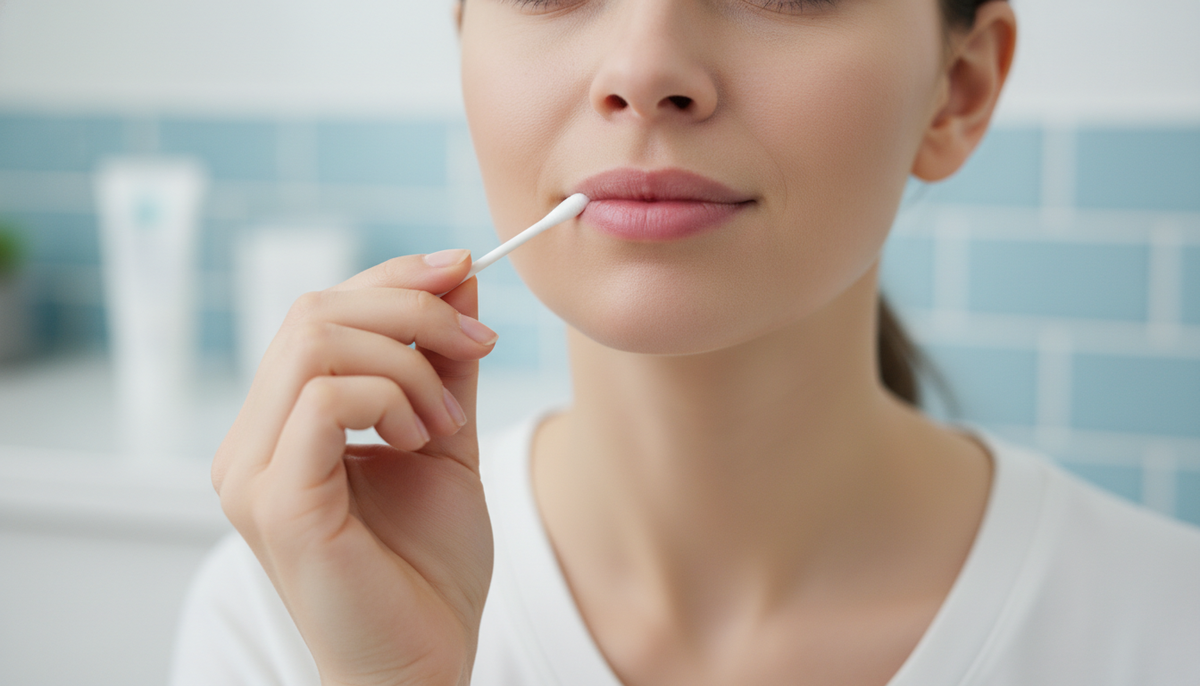
If I have to go out, I have a very strict sanitation ritual. I never, ever apply lipstick or concealer directly to the sore from the tube. That’s just asking for a reinfection later. I use single-use cotton swabs to dab on product. Once that swab touches my lip, it goes straight into the trash. I treat the area like a sterile surgical site. This level of care is similar to how one might how to treat angular cheilitis at home, where hygiene is paramount.
I also make sure to cancel any aesthetic appointments. If I have filler or a facial scheduled, I move it. I’ve seen what happens when you needle through an active outbreak—it’s not pretty. I usually wait a full two weeks after the skin is completely clear before I let anyone near my face with a syringe or a chemical peel. Safety first, aesthetics second.

The Sanitation Reset: How I Prevent the Cycle
Once the healing begins, I perform what I call a "sanitation reset." I toss my toothbrush. It sounds extreme, but the virus can linger in the bristles, and I’m not taking any chances of a back-to-back outbreak. I also get rid of any lip balms I used during that initial tingle phase. I switch to using separate towels for my face and my body, and I swap my pillowcase every single night until the skin is 100% normal.
Internal Support: My Long-Term Defense Strategy
I’ve realized that how to safely treat a cold sore blister on the lip is also about how I treat my body. The virus wakes up when I’m run down. I’ve started being very religious about SPF on my lips; UV rays are my biggest trigger. If I’m going to the beach or skiing, I’m wearing a heavy-duty zinc-based lip shield.
I also keep my immune system supported. For me, that means:
- L-Lysine: I take this amino acid regularly to help keep the virus in check.
- Zinc and Vitamin C: My "power duo" for skin repair and immune resilience.
- Dietary Awareness: I try to avoid heavy amounts of Arginine (found in nuts and dark chocolate) when I feel stressed, as it can sometimes feed an outbreak.
When I Know it’s Time to Call a Professional
I’ve learned that sometimes, home management isn't enough. If I start getting more than five or six outbreaks a year, I don't just suffer through it—I talk to my specialist about suppressive therapy. There’s no shame in taking a daily low-dose antiviral to keep your skin clear, especially if your career depends on your face. Modern medicine is a tool; I’ve learned to use it to keep my confidence intact and my skin pristine.

Frequently Asked Questions
What is the 'ghost itch' stage of a cold sore?
The 'ghost itch' is the prodrome stage, characterized by a localized tingling, burning, or rhythmic thrumming sensation on the lip before a visible blister appears. Intervening at this stage with ice and antivirals can often prevent the blister from forming.
Why should you never pop a cold sore blister?
A cold sore is a viral colony, not a pimple. Popping it releases the virus, which can lead to 'satellite' sores, secondary staph infections, and permanent scarring on the vermilion border of the lip.
How do hydrocolloid patches help treat cold sores?
Hydrocolloid patches act as a sterile second skin. They keep the area moist to prevent painful scabbing, provide a barrier against contamination, and can be discreetly covered with makeup.
When should I seek professional help for cold sores?
If you experience more than five or six outbreaks per year, you should consult a specialist about suppressive therapy, which involves a daily low-dose antiviral to prevent future occurrences.
Frequently Asked Questions
General
What is the 'ghost itch' stage of a cold sore?
What is the 'ghost itch' stage of a cold sore?
The 'ghost itch' is the prodrome stage, characterized by a localized tingling, burning, or rhythmic thrumming sensation on the lip before a visible blister appears. Intervening at this stage with ice and antivirals can often prevent the blister from forming.
General
Why should you never pop a cold sore blister?
Why should you never pop a cold sore blister?
A cold sore is a viral colony, not a pimple. Popping it releases the virus, which can lead to 'satellite' sores, secondary staph infections, and permanent scarring on the vermilion border of the lip.
General
How do hydrocolloid patches help treat cold sores?
How do hydrocolloid patches help treat cold sores?
Hydrocolloid patches act as a sterile second skin. They keep the area moist to prevent painful scabbing, provide a barrier against contamination, and can be discreetly covered with makeup.
General
When should I seek professional help for cold sores?
When should I seek professional help for cold sores?
If you experience more than five or six outbreaks per year, you should consult a specialist about suppressive therapy, which involves a daily low-dose antiviral to prevent future occurrences.