
Architectural Integrity and the Mandibular Border: A Practitioner’s Perspective
Direct Answer
Medical skin tightening for the jawline is a multi-modal approach that uses regenerative treatments like PRF and exosomes, alongside energy-based devices like HIFU and RF microneedling. These therapies address the root causes of sagging—specifically collagen depletion and bone resorption—to restore facial architecture and create a defined, youthful mandibular border without surgery.
For twenty years, I have lived in the tension between the unforgiving mechanics of dentistry and the nuanced, liquid artistry of regenerative aesthetics. It is a unique vantage point. From where I sit, the jawline isn't merely a cosmetic "zone"; it is the structural keystone of the entire lower face. It is the first line of defense against the relentless pull of gravity, and yet, it is often the first territory to surrender. When patients point to their jowls, they see skin. I see a complex, multi-layered collapse—a shifting tessellation of bone resorption, migrating fat volumes, and a catastrophic loss of dermal elasticity. To tighten a jawline, I don't just treat the surface; I recalibrate a biological ecosystem by looking Beyond the Scalpel: A New Era of Advanced Anti-Aging Medical Aesthetics.
In my experience, the most successful jawline rejuvenations are those that account for the underlying dental architecture. We often see patients who present with significant jowling that is actually exacerbated by a loss of vertical dimension in their bite due to tooth wear; by combining orthodontic or restorative dental care with medical skin tightening, we achieve a much more stable and natural aesthetic result than skin treatment alone could provide.
— Clinical Observation

The era of the "wind-tunnel" surgical pull is, thankfully, a relic. We have entered a sophisticated age defined by bio-mimicry. My methodology today is less about "pulling" and more about "prompting." It’s a synthesis of structural reinforcement and cellular rebooting. By combining a deep clinical grasp of facial anatomy with high-precision technology, I can sculpt a mandibular border that isn't just sharp—it’s structurally sound and authentically human.
Deciphering the Descent: Why the Frame Fails
To fix laxity, I must first diagnose the specific failure of the body's internal "glue." As we age, the production of Type I collagen—the literal scaffolding of our skin—doesn't just slow down; it stutters and becomes disorganized. Simultaneously, elastin fibers, which provide that youthful "snap," begin to fragment. Gravity is a patient thief, waiting for these proteins to fail so the skin can begin its slow drape over the bone. This is how the crisp line of youth becomes the heavy, weighted "jowl."

However, as both an orthodontist and an aesthetic specialist, I always remind my patients that the skin is only half the story. Bone is dynamic. The mandible itself loses volume and density over time. I often use the metaphor of a tent: if the center pole—the bone—shortens or thins, the fabric—the skin—will inevitably sag, regardless of the fabric's quality. My approach to medical skin tightening for the jawline is, therefore, a two-front war: I must increase the skin’s internal tension while respecting, and often restoring, the underlying foundation.
The Alchemy of Self-Repair: PRP and PRF
In my clinical practice, I am a fierce advocate for treatments that hijack the patient’s own biology for good. Platelet-Rich Plasma (PRP) and Platelet-Rich Fibrin (PRF) are evidence-based tools that serve as a foundation for initiating a regenerative healing cascade. These autologous treatments concentrate the growth factors found within the patient’s own blood to "jumpstart" a dormant healing response.
Platelet-Rich Fibrin (PRF) is particularly vital for jawline definition. When comparing PRF vs PRP for Skin Aesthetics: The Expert Guide to Regenerative Beauty, PRF is often superior for structural work. Because PRF creates a slow-release fibrin matrix, it keeps growth factors trapped and active within the tissue for much longer than traditional PRP. I think of it as a sustained "whisper" to the fibroblasts, instructing them to weave new, dense collagen fibers. When I map PRF into the submental area and along the jaw, I am essentially thickening the dermis from within, creating a more resilient, tighter envelope for the lower face.
Exosomes: The High-Speed Language of Renewal
If PRF is a signal, I consider exosomes to be the high-speed fiber-optic cables of cellular communication. These tiny extracellular vesicles carry a concentrated payload of proteins, lipids, and genetic instructions. In the realm of medical skin tightening for the jawline, exosome therapy has been a total paradigm shift for me. It doesn't just "ask" the skin to repair itself; it provides the specific blueprints on how to do so with maximum efficiency.
I frequently layer exosomes with microneedling. We create thousands of micro-channels that act as direct conduits, allowing these potent messengers to reach the deep layers where they can do the most work. The results I observe demonstrate significant improvement in tissue quality and visible contouring, reflecting both structural lifting and enhanced dermal health. It is a total restoration of the skin’s health, not just a change in its position.
Thermal Energy and the Art of Contraction
Non-invasive energy-based devices have completely transformed how I manage the lower third of the face. These technologies rely on the biological principle of "controlled thermal injury." By heating the deep dermis to a very specific temperature, I can induce an immediate contraction of collagen and trigger a months-long "wound healing" response that culminates in fresh, organized collagen.

Radiofrequency (RF) Microneedling
This is my workhorse. RF microneedling combines mechanical stimulus with thermal energy. The needles penetrate to a precise depth before delivering a pulse of radiofrequency. This is exceptionally effective for jowls because it allows me to treat the tissue exactly where the laxity is most aggressive. We aren't just skimming the surface; we are shrinking the structural layers.
High-Intensity Focused Ultrasound (HIFU)
Often referred to as Ultherapy, HIFU is unique because it can reach the SMAS—the deep muscular layer that was once the exclusive domain of surgeons. By creating precise thermal coagulation points at this depth, I can achieve a lifting effect that is unparalleled in non-surgical medicine. For patients with moderate sagging who aren't ready for the scalpel, HIFU offers a way to "anchor" the jawline back into a youthful alignment.
The Orthodontic Edge: Why the Bite Matters
My background in orthodontics gives me a lens that many aesthetic injectors lack. I often see patients frustrated by their sagging jawlines, only to realize the root cause is a loss of "vertical dimension" in their bite. If the teeth are worn down or the jaw is misaligned, the lower face essentially collapses inward. No amount of skin tightening can compensate for a lack of dental support. When deciding between a Dentist vs. Orthodontist: Which Specialist Do You Actually Need?, it is important to understand that structural alignment is the base of all aesthetics.

In these cases, the most lasting results come from a combined approach. I might use restorative dentistry or orthodontics to "re-proportioneer" the face, providing the necessary height for the skin to sit smoothly. When we follow this with medical skin tightening for the jawline, the results are transformative because we are finally treating the cause, not just the symptom.
Biostimulators: Engineering a New Framework
While traditional fillers have their uses, I find myself reaching for Dermal Bio-stimulants for Skin Laxity: Restoring Facial Architecture Naturally more frequently. Products like calcium hydroxylapatite are not "fillers" in the traditional sense; they are catalysts. They don't just occupy space; they stimulate the body to weave its own network of collagen. When I place these strategically along the mandibular angle, they provide a crispness that looks and feels structural. The jawline remains sharp even during movement, avoiding the heavy, "over-filled" look that can sometimes occur with hyaluronic acid.
Refining the Submental Vector
A jawline can only be as sharp as the neck beneath it. I treat the jaw and the submental area (under the chin) as a single aesthetic unit. If there is a pocket of submental fat, I may use deoxycholic acid to dissolve it, followed immediately by RF microneedling to ensure the skin "shrink-wraps" around the newly defined bone. The goal is a clean, 90-degree transition—the universal hallmark of a youthful profile.

The Clinical Mandate: Bespoke Customization
There is no "standard" jawline. Every patient requires a unique, bespoke strategy.
- For the 30-something patient, I might focus on PRF and preventative HIFU to maintain the current "snap."
- For the 50-something patient, I often need a combination of biostimulators, RF microneedling, and exosomes to rebuild lost architecture.
- For the patient with significant dental wear, I must address the bite before I touch the skin.
I prioritize treatments with minimal downtime because I know my patients have lives to lead. They want professional-grade, evidence-based results without the "obviousness" of a surgical intervention.
Defining the Future
The future of medical skin tightening for the jawline isn't about adding more volume; it's about engineering better biology. We are learning to speak the language of the cells, using energy, growth factors, and structural alignment to restore what time has taken. It is an exciting era to be in this field, where the intersection of dentistry and aesthetics allows me to build profiles that are not only beautiful but biologically vibrant. Achieving a defined jawline is now a matter of precision science, tailored to the unique anatomy of each individual who sits in my chair.
Frequently Asked Questions
General
Why does the jawline sag even if the skin quality seems healthy?
Why does the jawline sag even if the skin quality seems healthy?
Jawline sagging, or jowling, is a multi-layered collapse. It is often caused by bone resorption in the mandible (the bone shrinking like a 'tent pole') combined with a loss of vertical height in the teeth or bite. When the underlying structural frame fails, the skin—regardless of its quality—begins to drape and sag over the lower face.
General
What is the difference between PRF and PRP for jawline tightening?
What is the difference between PRF and PRP for jawline tightening?
While both use your own blood, PRF (Platelet-Rich Fibrin) is often superior for the jawline because it creates a slow-release fibrin matrix. This matrix traps growth factors and releases them over a longer period compared to traditional PRP, providing a sustained stimulus to fibroblasts to produce the dense, structural collagen needed for a defined mandibular border.
General
How can an orthodontist help improve a sagging jawline?
How can an orthodontist help improve a sagging jawline?
An orthodontist looks at the 'vertical dimension' of your face. If your teeth are worn down or your jaw is misaligned, the lower third of your face can collapse inward. By using restorative dentistry or orthodontics to restore the correct height and alignment of the bite, the skin is naturally smoothed and supported, creating a foundation that medical skin tightening treatments can then refine.
General
What are the best non-surgical technologies for lifting the jowls?
What are the best non-surgical technologies for lifting the jowls?
The most effective non-surgical tools include High-Intensity Focused Ultrasound (HIFU), which targets the deep SMAS layer to anchor the jawline, and Radiofrequency (RF) Microneedling, which shrinks structural layers through controlled thermal energy. Biostimulators like calcium hydroxylapatite also help by engineering a new internal framework of collagen rather than just adding volume.
General
Is exosome therapy better than traditional microneedling for skin tightening?
Is exosome therapy better than traditional microneedling for skin tightening?
Exosome therapy is most effective when combined with microneedling. While microneedling creates micro-channels, exosomes act as high-speed 'messengers' that deliver a concentrated payload of proteins and genetic instructions through those channels. This 'paradigm shift' doesn't just ask the skin to repair itself; it provides the specific biological blueprints needed for maximum efficiency in cellular renewal.
Key Takeaways
- Jawline laxity is caused by a combination of dermal collagen loss, fat migration, and mandibular bone resorption.
- Regenerative therapies like PRF and Exosomes act as biological catalysts to rebuild the skin's internal scaffolding.
- Energy-based devices like HIFU target the deep SMAS layer, which was previously only accessible via surgical intervention.
- A comprehensive assessment of dental and orthodontic alignment is crucial for providing the structural support necessary for skin tightening.
- Biostimulators like calcium hydroxylapatite help engineer a crisp mandibular angle by stimulating the body's own collagen production.
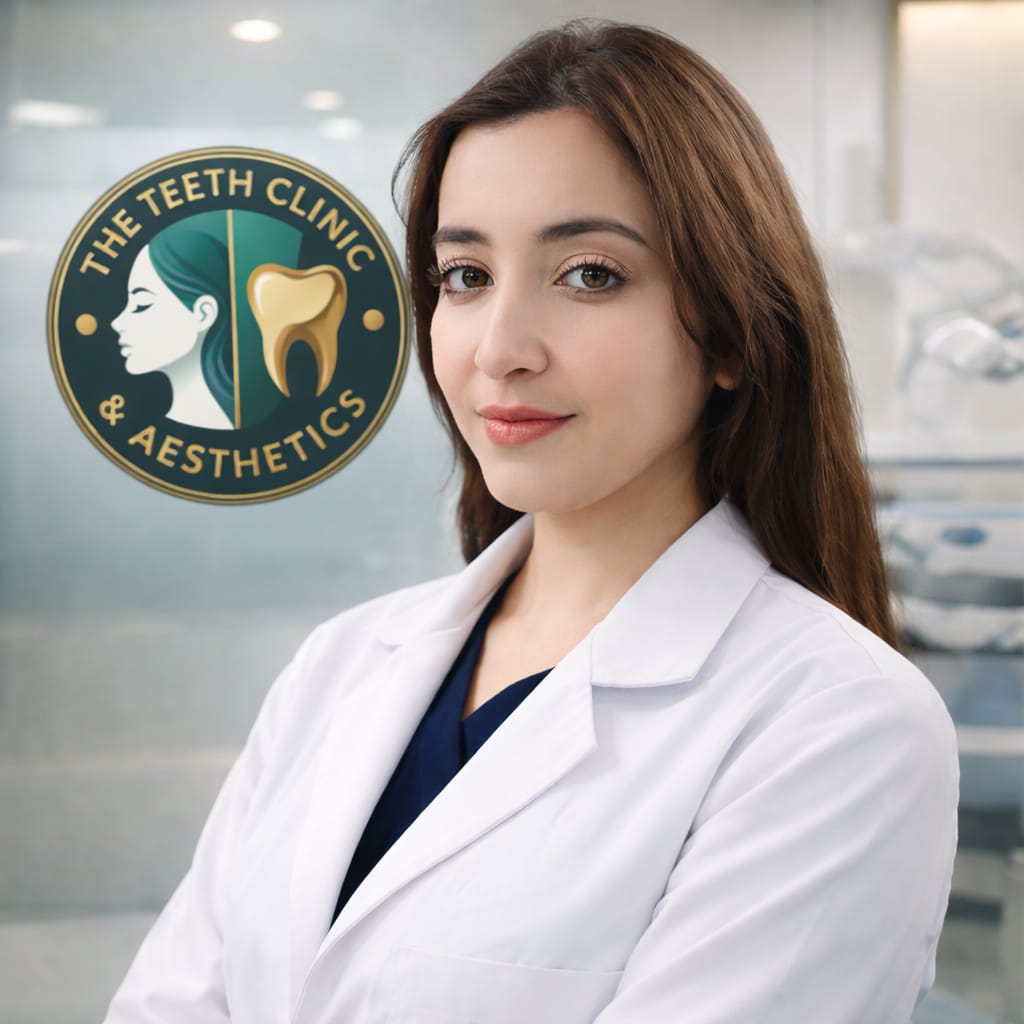
Dr. Afshan Pervez
Lead Dental Surgeon & Aesthetician | BDS, RDS, Orthodontist
Dr. Afshan Pervez is a distinguished expert in Dentistry and Regenerative Aesthetics with over 15 years of clinical experience. Her practice focuses on the synergy between structural facial architecture and cellular renewal, leveraging her background in orthodontics to provide a unique perspective on facial aging. Dr. Pervez is a leading advocate for evidence-based, minimally invasive techniques that restore both function and aesthetic vitality.
Last reviewed: 12/04/2026