
Beyond the Surface: Why I’ve Shifted to PRF for Structural Aging
Direct Answer
PRF (Platelet-Rich Fibrin) for facial volume loss uses a concentrated matrix of your own cells to stimulate natural collagen and elastin production. Unlike synthetic fillers that provide instant camouflage, PRF acts as a biological scaffold, releasing growth factors over ten days to restore skin density and structural integrity from within for gradual, natural rejuvenation.
When I sit across from a patient in my consultation room, they rarely point to a single wrinkle. Instead, they trace the hollows of their cheeks or the shadows under their eyes with a sense of quiet frustration. They tell me they look "tired," regardless of how much sleep they’ve had. After fifteen years in this field, I’ve realized that what they are actually mourning is the loss of structural integrity—the slow, silent retreat of deep fat pads and the thinning of the skin’s architecture. For a long time, we only had synthetic fillers to bridge that gap. But today, I’ve found a more profound answer in PRF for facial volume loss. It isn't just a filler; it’s a biological wake-up call.
In my experience, patients often transition to PRF after experiencing 'filler fatigue' or dissatisfaction with the puffiness associated with hyaluronic acid. I have observed that while synthetic fillers are excellent for deep structural support, PRF is unmatched for thinning skin in the periorbital and perioral regions. Clinical outcomes show that the skin doesn't just look fuller; it becomes demonstrably thicker and more resilient over a six-month period, which synthetic products simply cannot achieve.
— Clinical Observation

Platelet-Rich Fibrin (PRF) is what I like to call "PRP 2.0." While the older Platelet-Rich Plasma was a breakthrough, it was often too fleeting. PRF is different. It’s a concentrated, living matrix of your own cells. By harnessing your body’s internal pharmacy, I’m no longer just masking a hollow; I’m inviting your skin to behave as it did a decade ago. This approach is central to modern Medical Grade Facial Contouring: The Art of Biological Resilience, where we focus on restoration rather than just augmentation.
The Fibrin Scaffold: A Slow-Release Revolution
The magic happens in the centrifuge, but the secret is in the speed. In my clinic, we use a specific low-speed protocol that preserves more than just platelets. By spinning the blood slowly, we keep the white blood cells and mesenchymal stem cells intact. These are the heavy hitters of regeneration. They are suspended in a thick, natural fibrin mesh—a biological "nest" that traditional PRP simply lacks.

Why does this matter for your face? In traditional treatments, growth factors are gone within hours. With PRF for facial volume loss, that fibrin scaffold stays under your skin, acting as a slow-release reservoir. It drips growth factors into your tissue for up to ten days. This sustained signaling is what finally convinces those stubborn fibroblasts to start churning out new collagen and elastin again. It’s not an artificial "puffiness"; it’s the slow, steady return of your own tissue density.
Targeting the Shadows: Where I See the Best Results
I look at the face as a landscape of light and shadow. Volume loss creates shadows; PRF restores the light. Here is how I strategically apply it:
- The Under-Eye Hollows: This is my favorite use for PRF. The skin here is paper-thin. When I use synthetic fillers, I’m always wary of the Tyndall effect—that unnatural blue tint or the "sausage-like" puffiness that can occur. PRF integrates perfectly. It thickens the dermis from within, erasing that skeletal look without the risks of synthetics.
- The Mid-Face Collapse: As our malar fat pads shrink, everything slides downward. I use PRF here to create a subtle, organic cushion. For patients wanting to see the potential of restoration in this area, I often show Cheek Filler Before and After: Stunning Results & What to Expect as a benchmark for volume, though PRF offers a softer, more biological finish.
- The Perioral Area: Those vertical "smoker's lines" or the deepening shadows at the corners of the mouth respond beautifully to the regenerative power of PRF. We are softening the transition zones, not just filling a crack.
- Temporal Hollowing: Sunken temples are a dead giveaway of age. PRF provides a smooth, feather-light restoration to the upper face that keeps the silhouette balanced.

The Luxury of Discretion
We are living in an era where "overfilled" is out. My patients want a look that is whisper-quiet. They want to look vibrant, not "done." This is the primary reason I advocate for PRF for facial volume loss. Because the results are your own collagen, the change is gradual. No one walks into a party two days later looking like a different person. Instead, over two months, you simply look better. More rested. More you.
There’s also a psychological comfort in the "autologous" nature of the treatment. I’m injecting you with... you. Change to 'virtually non-existent risk of allergic reactions' or 'negligible risk' as reactions to processing additives or needles, though rare, can occur., and no worries about long-term foreign body granulomas. For my patients who live a holistic lifestyle, this is the ultimate Non-Toxic Aesthetic Medicine: The Future of Regenerative Beauty.
The Clinical Ritual: What to Expect in My Chair

The process is remarkably straightforward. We draw a small amount of your blood—about the same as a standard physical. While my team spins it in the specialized PRF centrifuge, you relax. Within ten minutes, I have a syringe of "liquid gold" ready to go.
I prefer using micro-cannulas for these injections. They allow me to glide through the tissue with far less trauma and bruising than traditional needles. The whole session is usually wrapped up in under an hour. You might feel a bit "full" or slightly swollen for a day or two—honestly, it’s just the inflammatory cascade starting its work—but you can go right back to your life almost immediately.
PRF vs. Synthetic Fillers: My Honest Take
I still use synthetic fillers. They have their place, especially if someone needs significant projection in the chin or a sharp, immediate jawline. But fillers are a temporary fix; they are a camouflage. They don’t change the health of your skin. We are entering a phase that goes Beyond the Scalpel: A New Era of Advanced Anti-Aging Medical Aesthetics, where the focus is on cellular health.
PRF for facial volume loss is a long-term investment. It’s the difference between buying a new coat and repairing the fabric of the one you have. I often suggest a "hybrid" approach: a touch of filler for immediate lift, followed by PRF to ensure the skin overlying that filler is thick, glowing, and healthy. Eventually, my goal is to get my patients to a point where they need less and less synthetic product because their own tissue is doing the heavy lifting.
The Future: Exosomes and Stacking Results
In my practice, I’m always pushing the envelope. When we combine PRF with exosomes—microscopic signaling vesicles—the results are even more staggering. Think of PRF as the building materials and the exosomes as the highly efficient foremen directing the construction. This combination is the peak of regenerative aesthetics today.
Remember, regeneration is a marathon, not a sprint. I typically recommend a series of three sessions. We "stack" the collagen production. You’ll see a glow after the first, but the real structural change happens after the third, about four to six months in. From there, a single annual "booster" is usually all it takes to keep time at bay.
Is This Your Next Step?
If you are tired of the "quick fix" and want to invest in your own biological longevity, PRF is likely the answer. It requires a healthy body—if you smoke or have a poor diet, your "liquid gold" won't be quite as potent—but for the discerning patient, it is the gold standard. We aren't trying to make you look twenty again. We are trying to make sure that the version of you that looks back from the mirror is as energetic and vital as the person you feel like inside. That, to me, is the true power of regenerative medicine.
Frequently Asked Questions
General
How does PRF differ from traditional PRP for treating facial volume loss?
How does PRF differ from traditional PRP for treating facial volume loss?
PRF (Platelet-Rich Fibrin) is often considered 'PRP 2.0' because it uses a low-speed centrifuge process that preserves white blood cells and stem cells. Unlike PRP, which releases growth factors quickly, PRF creates a fibrin scaffold that acts as a slow-release reservoir, delivering growth factors to your tissue for up to ten days to stimulate long-term collagen and elastin production.
General
How many PRF sessions are required to see significant results?
How many PRF sessions are required to see significant results?
Since PRF relies on your body’s natural regenerative process, it is a marathon rather than a sprint. While a glow may be visible after the first session, a series of three treatments is typically recommended to 'stack' collagen production. Real structural changes and restoration of volume are usually most apparent about four to six months after starting the protocol.
General
Why is PRF recommended for the under-eye area over synthetic fillers?
Why is PRF recommended for the under-eye area over synthetic fillers?
The skin under the eyes is extremely thin, making synthetic fillers risky due to the potential for the Tyndall effect (a blue tint) or unnatural puffiness. PRF is autologous—meaning it comes from your own blood—so it integrates perfectly with your tissue. It thickens the dermis naturally, erasing shadows and hollows without the risks of allergic reactions or a 'done' look.
General
Is there any downtime associated with PRF injections?
Is there any downtime associated with PRF injections?
Downtime is minimal. The procedure itself takes under an hour. You may experience slight swelling or a feeling of 'fullness' for 24 to 48 hours as the inflammatory cascade begins its regenerative work. Most patients return to their normal activities immediately, especially when micro-cannulas are used to minimize bruising and tissue trauma.
General
Can PRF be used in combination with other aesthetic treatments?
Can PRF be used in combination with other aesthetic treatments?
Absolutely. Many patients benefit from a 'hybrid' approach where synthetic fillers provide an immediate structural lift, while PRF is used to ensure the overlying skin is healthy and thick. PRF can also be combined with exosomes to further accelerate cellular repair and maximize the results of regenerative aesthetic medicine.
Key Takeaways
- PRF is an autologous treatment that uses the patient's own blood to trigger natural tissue regeneration and collagen synthesis.
- Unlike traditional PRP, PRF contains a fibrin scaffold that provides a slow-release of growth factors for up to ten days after injection.
- The treatment is ideal for delicate areas like under-eye hollows where synthetic fillers may cause blue tinting or unnatural swelling.
- Optimal results typically require a series of three treatments, with structural improvements appearing gradually over four to six months.
- PRF focuses on long-term cellular health and biological longevity rather than providing just a temporary cosmetic fix.
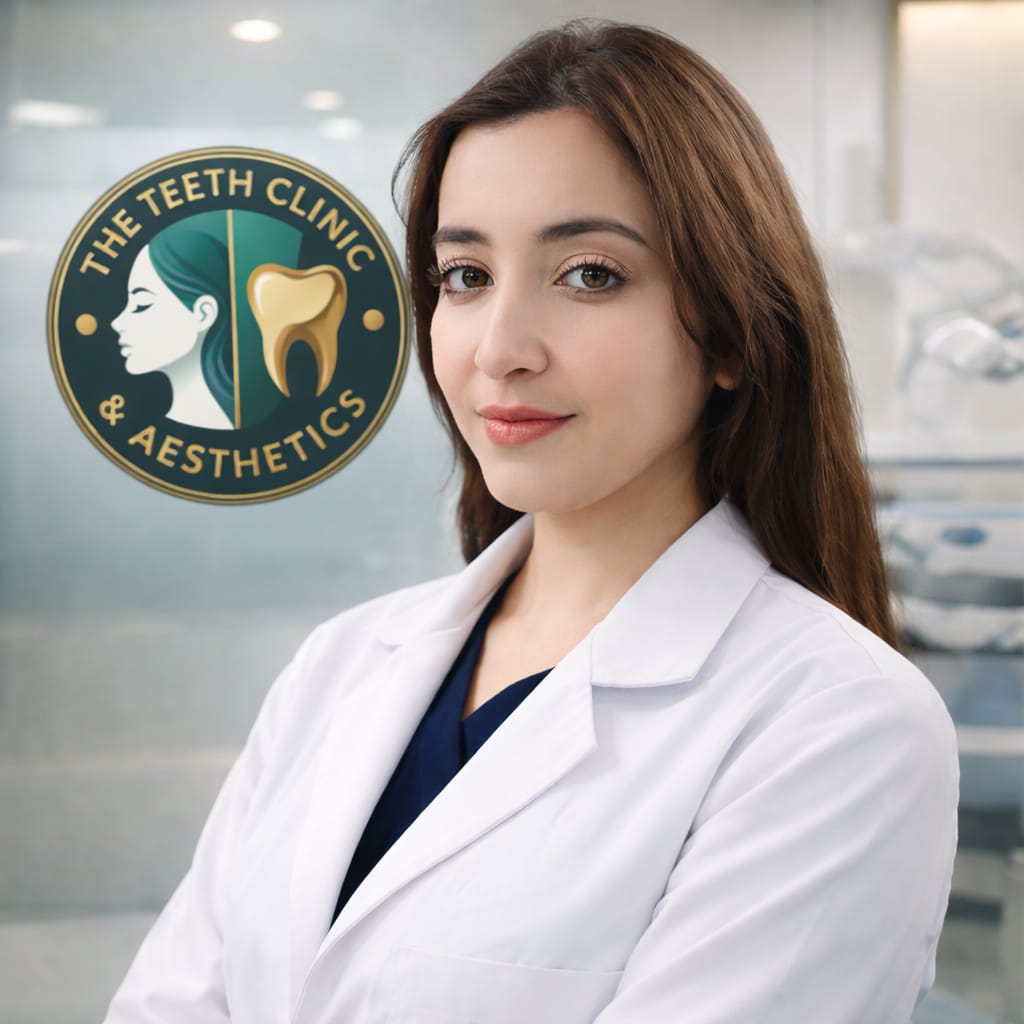
Dr. Afshan Pervez
Lead Dental Surgeon & Aesthetician | BDS, RDS, Orthodontist
Dr. Afshan Pervez is a leading expert in Dentistry and Regenerative Aesthetics with over 15 years of clinical experience. Specializing in medical-grade facial contouring and the science of biological resilience, she focuses on restoring structural integrity through advanced autologous treatments. Dr. Pervez is a dedicated advocate for non-toxic aesthetic medicine, combining clinical precision with a holistic approach to regenerative beauty.
Last reviewed: 29/04/2026