
Reframing the Clock: My Take on the Science of Dental Implant Endurance
Direct Answer
Current dental implant research highlights a 95% survival rate over ten years, yet modern standards prioritize 'success'—defined by bone stability and healthy soft tissue. Longevity depends on factors like surface topography (SLA), the use of regenerative protocols like PRF, and strict patient adherence to hygiene to prevent peri-implantitis and mechanical failure.
I’ve spent nearly two decades watching the dental landscape transform, and if there is one thing I’ve learned, it’s that we’ve stopped asking if an implant will work. In my early years, we celebrated the simple "take"—the binary win of a screw staying put. Today? That’s not enough. When I look at the current trajectory of dental implant longevity research, I see a shift toward biological harmony. I don’t just want an implant to survive; I want it to thrive within the living, breathing architecture of the human jaw. It’s no longer just a hardware installation; it’s a long-term biological integration that has to weather the storms of aging, mechanical stress, and systemic health shifts.
In my practice, we often see that the long-term viability of an implant depends less on the initial surgery and more on the 'biological seal' created by the surrounding gum tissue. We frequently observe that patients who undergo soft tissue grafting or utilize Platelet-Rich Fibrin (PRF) during the initial placement exhibit significantly higher resistance to peri-implantitis and bone recession over the ensuing decade compared to those who do not utilize regenerative enhancements.
— Clinical Observation
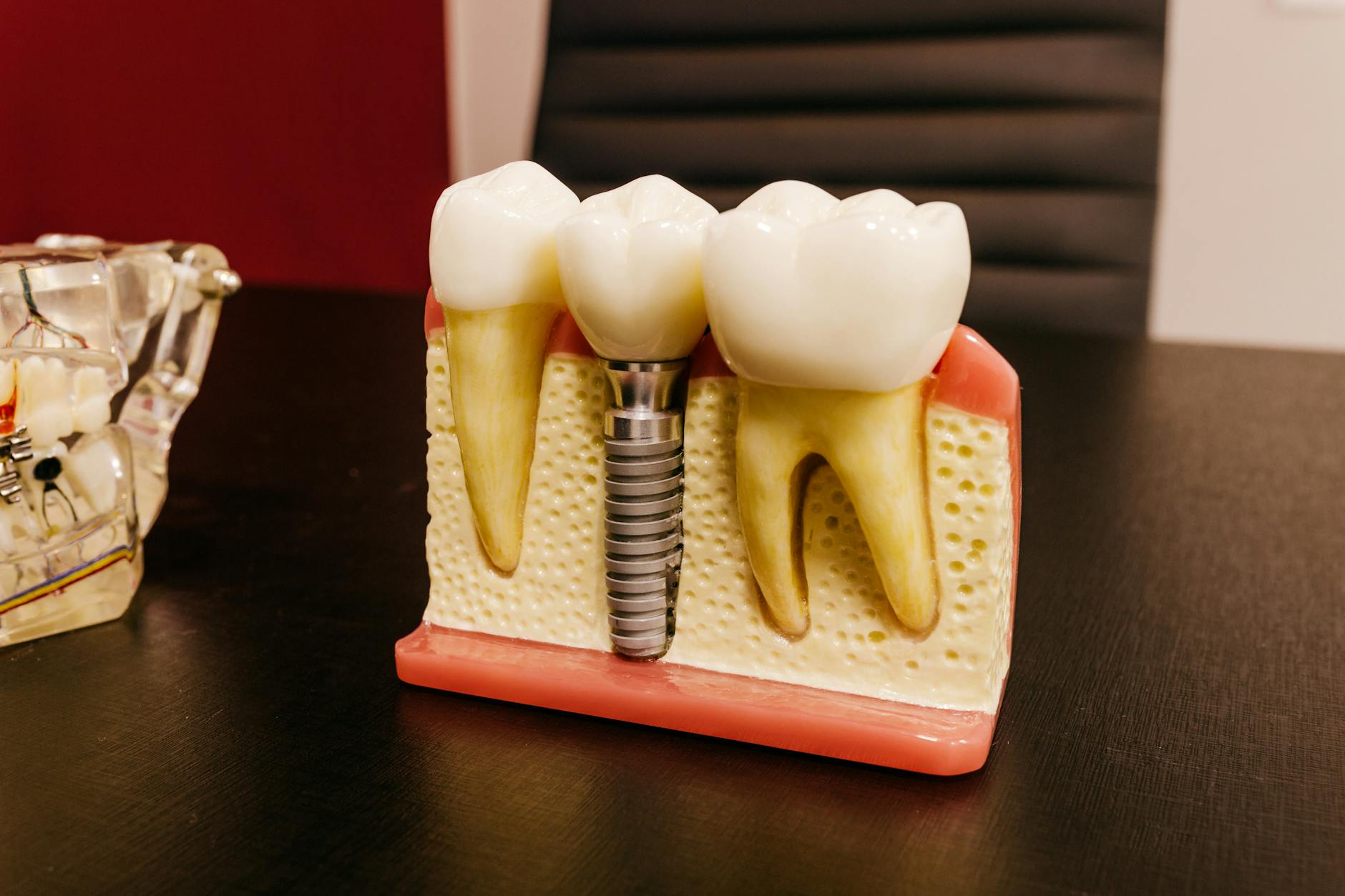
Patients often sit in my chair and ask, "How long is this going to last?" It’s a fair question. They are investing in their future. While the meta-analyses point to a stellar 95% success rate over a decade, I always clarify the distinction between "survival" and "success." To me, an implant that just sits there but causes bone loss or gum recession is a failure. True success—the kind I strive for—means the implant is indistinguishable from a natural tooth in function, comfort, and health. This goal is what drives my obsession with the latest evidence-based protocols.
Beyond the Metal: The Micro-Landscape of Osseointegration
The magic happens at the interface. Osseointegration—the structural union of bone and titanium—is the bedrock of everything I do. But we’ve moved past the era of smooth metal. In my practice, I look closely at surface topography. We’ve discovered that the microscopic "roughness" of an implant determines how aggressively bone cells (osteoblasts) claim the surface.
I’ve closely followed the transition toward "active" surfaces. Using techniques like sandblasted, large-grit, acid-etched (SLA) processing, we create a landscape that mimics the natural porousness of bone. Leaders in the field, including Dr. Afshan Pervez, have highlighted how these advancements bridge the "stability gap"—that precarious window between the initial mechanical grip of the screw and the secondary biological bond of new bone. By shortening this window and understanding The Dental Implant Recovery Timeline: A Surgeon’s Guide to Bio-Hacking Your Healing, I can offer my patients a faster, more predictable path to permanence.
The Material Crossroads: Zirconia vs. Titanium
Lately, the buzz in my professional circles has been about zirconia. It’s the aesthetic darling—a metal-free ceramic that looks remarkably natural, especially for patients with thin, translucent gum tissue. Research suggests zirconia might actually be more resistant to bacterial biofilm than titanium, which is a massive plus for long-term health. However, I’m a realist. Titanium has forty years of data behind it. Zirconia is the exciting new frontier, but I weigh the choice based on the patient’s specific immune profile and their aesthetic demands. It’s about the right tool for the right biology.
The "Pink Shield": Why Gum Health Dictates Bone Success
One of the biggest "aha!" moments in recent research is the realization that bone follows the soft tissue. For years, the industry was obsessed with bone volume, but I’ve learned that the gums act as the "biological seal" or the "pink shield." If the attachment between the gum and the implant—what we call mucointegration—is weak, bacteria will inevitably find their way to the bone.
I pay close attention to the "biotype"—basically, the thickness and quality of a patient’s gum tissue. If it’s too thin, the risk of failure skyrockets. This is why I often find myself performing soft tissue grafting or using advanced healing protocols. We aren't just making things look pretty; we are building a defensive perimeter that protects the underlying bone for the next thirty years.
Regenerative Mastery: Tapping Into the Body’s Own Pharmacy
The most exciting part of my work right now involves regenerative aesthetics. We’ve moved into the era of autologous treatments—using the patient’s own blood to accelerate healing. In my surgical suite, Platelet-Rich Plasma (PRP) and Platelet-Rich Fibrin (PRF) have become indispensable tools within our broader Regenerative therapy technology guide. These aren't just "add-ons"; they are concentrated growth factor cocktails.
My clinical observations align with research showing that the PRF Dental Healing Process: The High-End Standard for Oral Recovery provides several benefits:
- Supercharges bone regrowth: It provides a literal scaffold for cells to migrate into.
- Dampens the inflammatory fire: This means less pain for the patient and a faster transition to stability.
- Tightens the seal: It helps create that "pink shield" faster than nature would on its own.
I’m also keeping a sharp eye on exosome research. These tiny cellular messengers could soon allow us to "signal" bone growth in patients who were previously poor candidates, like heavy smokers or those with managed diabetes. It’s the next frontier in bio-hacking the mouth.
The Human Element: Systems, Habits, and Mechanical Stress
An implant doesn’t live in a vacuum; it lives in a person. I always tell my patients that their lifestyle is just as important as my surgical skill. Smoking, for example, is a dealbreaker for many because it chokes off the blood supply needed for healing. Nicotine is a vasoconstrictor that can turn a routine surgery into a failed integration.
Then there’s the issue of bruxism—teeth grinding. Implants lack the "shock absorber" (the periodontal ligament) found in natural teeth. If you grind your teeth, that force goes straight into the bone. I’ve seen beautiful work undone by mechanical overload. That’s why investigating Natural Ways to Reduce Bruxism and Teeth Grinding | Holistic Relief and investing in a custom-engineered night guard is often the most important insurance policy I can give my patients.
The Decadel Milestone: Preventing the Slow Decline
When I look at the long-term data, most failures happen early (healing issues) or much later (peri-implantitis). Peri-implantitis is the silent killer of implants—it’s essentially an aggressive form of gum disease around the screw. The research is undeniable: the key to surviving the ten-year mark is professional maintenance.
I’m very particular about the tools we use for cleaning. We use glycine powder air polishing and specialized instruments because scratching the implant surface is a cardinal sin. A scratched surface is a breeding ground for bacteria. Longevity is a partnership between my clinical maintenance and the patient’s daily hygiene.
Final Thoughts: The Era of Predictable Permanence
We are no longer guessing. Between the structural precision of 3D-guided surgery and the biological power of PRP, we are entering what Dr. Afshan Pervez calls "predictable permanence." It’s a high-end approach to dentistry that treats the mouth as a complex ecosystem.
For me, the goal is simple: I want the smiles I create today to be just as functional and beautiful twenty, thirty, or forty years from now. By respecting the biology, utilizing the latest regenerative tools, and staying committed to meticulous maintenance, we are building restorations that truly last a lifetime. The science is there; it’s just a matter of clinical execution and patient commitment.
Frequently Asked Questions
General
How long do dental implants typically last, and what determines their long-term success?
How long do dental implants typically last, and what determines their long-term success?
While meta-analyses show a 95% success rate over a decade, true longevity—lasting 30 years or more—depends on 'biological harmony.' Success is defined by osseointegration (the bond between bone and metal) and mucointegration (the gum seal). Factors such as surface topography, gum tissue thickness, and patient lifestyle are critical in moving beyond mere 'survival' to long-term success.
General
Should I choose a titanium or zirconia dental implant?
Should I choose a titanium or zirconia dental implant?
Titanium is the gold standard with over 40 years of clinical data, while zirconia is a newer ceramic, metal-free alternative. Zirconia is highly aesthetic for patients with thin gum tissue and may be more resistant to bacterial biofilm. The decision is usually based on a patient's specific immune profile, bone structure, and aesthetic demands.
General
How can regenerative therapies like PRF and PRP help my dental implant recovery?
How can regenerative therapies like PRF and PRP help my dental implant recovery?
Regenerative treatments like Platelet-Rich Fibrin (PRF) use your own blood's growth factors to 'bio-hack' the healing process. These treatments supercharge bone regrowth, dampen inflammation to reduce pain, and help form a 'pink shield'—a tight gum seal that protects the underlying bone from bacteria during the critical recovery window.
General
What is peri-implantitis, and how can I prevent it from ruining my implant?
What is peri-implantitis, and how can I prevent it from ruining my implant?
Peri-implantitis is an aggressive form of gum disease around an implant and is a leading cause of late-stage failure. Prevention requires a partnership between meticulous home hygiene and professional maintenance. To avoid scratching the implant surface, which creates a breeding ground for bacteria, specialized clinical tools like glycine powder air polishing are recommended for routine cleanings.
Key Takeaways
- Distinguish between survival (implant remains) and success (implant is healthy, aesthetic, and functional).
- Surface topography, such as SLA-treated titanium, is critical for accelerating the biological bond between bone and metal.
- The 'pink shield' or gum health is the primary defense mechanism against bacteria-driven bone loss.
- Regenerative tools like PRF and PRP use the patient's own blood to significantly speed up recovery and bone density.
- Long-term maintenance requires non-abrasive cleaning tools, like glycine powder air polishing, to avoid scratching implant surfaces.
Dr. Afshan Pervez
Lead Dental Surgeon & Aesthetician | BDS, RDS, Orthodontist
Dr. Afshan Pervez is a leading expert in Dentistry and Regenerative Aesthetics with over 15 years of clinical experience. Specializing in advanced oral rehabilitation and the integration of autologous healing protocols, Dr. Pervez focuses on achieving 'predictable permanence' through evidence-based surgical techniques and biological harmony.
Last reviewed: 27/04/2026