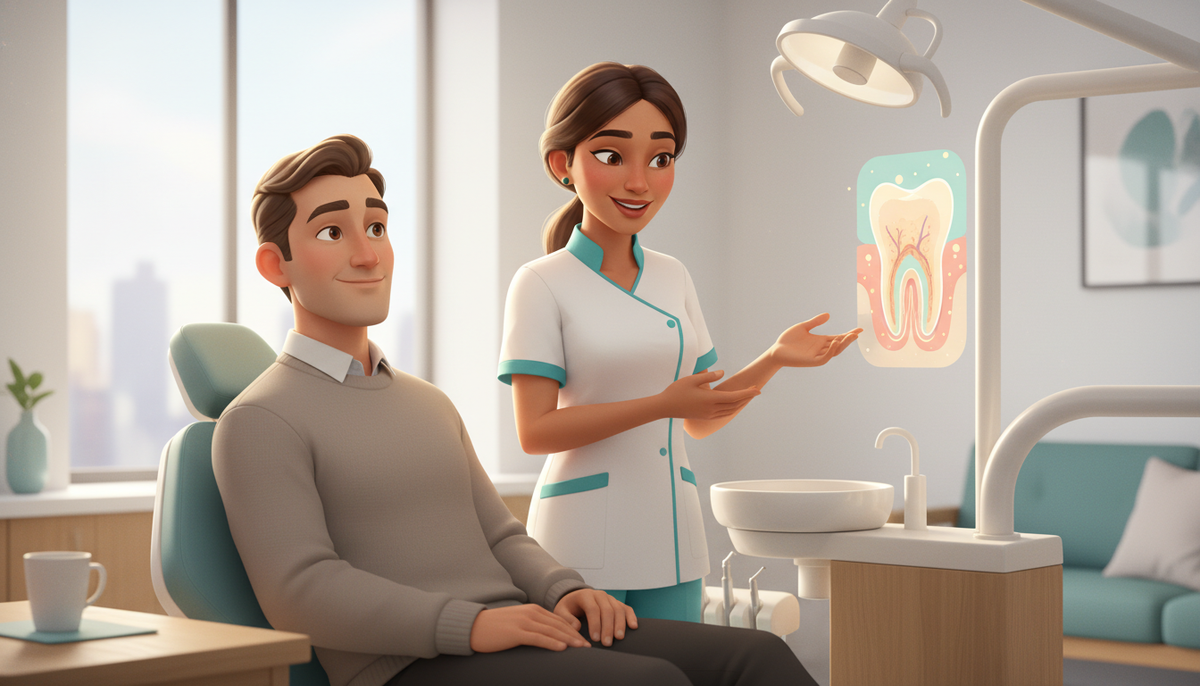
The Precarious 24: My Perspective on the Critical Post-Op Window
Direct Answer
The dental implant recovery timeline typically spans 3 to 6 months for full integration. While initial soft tissue healing and 'social recovery' occur within 7–10 days, the critical phase of osseointegration—where the bone fuses to the implant—requires several months of undisturbed biological growth to ensure long-term stability and success.
I often tell my patients that the first twenty-four hours after I place a dental implant aren't just about "taking it easy." It is a high-stakes biological event. Right now, your body is orchestrating a frantic, invisible construction project. The goal? Clot stabilization. I view that initial blood clot as a sacred architectural scaffold; it is the natural matrix that allows bone-building cells to move in and set up shop. If that clot is disturbed, the entire foundation of our work is at risk.
In our practice, we often see that the most successful outcomes are achieved when patients treat the first 48 hours as a period of absolute metabolic rest. We have observed that while adjuncts like PRF significantly reduce post-operative swelling and pain, the 'silent phase' of bone integration remains a constant biological requirement. Patients who prioritize nutrient density and avoid premature physical exertion consistently demonstrate higher bone-to-implant contact during their follow-up assessments.
— Clinical Observation
To keep this process on track, I insist on what I call "oral stillness." This means no vigorous rinsing and absolutely no straws—the negative pressure from a straw can yank that fragile clot right out of its socket like a cork from a bottle. You might notice some pink-tinged saliva or minor oozing. Don't panic. I recommend firm, steady pressure with sterile gauze. I also tell my patients to sleep with their heads propped up on an extra pillow that first night. Why? It lowers the hydrostatic pressure in your jaw, which keeps that rhythmic, annoying throb to a minimum. Following a specific How to Sleep Comfortably After Getting a Dental Implant: Recovery Guide can significantly improve your comfort during this sensitive phase.
The Metabolic Surge: Managing the Peak of Inflammation (Days 2-5)
By the second and third day, you’ve hit the crescendo of the healing process. This is when the immune system goes into overdrive. I see patients get worried when they look in the mirror and see swelling or a bit of yellowish bruising, but I actually see it as a sign of vitality. It is a metabolic storm—your body is flooding the site with white blood cells and nutrients. Usually, the discomfort peaks around the 48-hour mark. If you’ve been diligent with my ice pack protocol, you’ll likely see the tide turn by day four.
I advise a pivot on day three: stop the ice and start gentle, warm salt-water soaks. It’s not about scrubbing the site; it’s about a gentle "bathe" to keep the area clean and encourage blood flow. You might feel a sensation of tightness, almost like the implant is "full." That’s normal. I’ve noticed that my patients who prioritize hydration and deep, restorative sleep during these five days tend to cruise through the rest of the dental implant recovery timeline with far fewer hiccups.
Bio-Hacking Recovery: Why I Use PRF and Exosomes
In my practice, we don't just wait for the body to heal at its own sluggish pace. I prefer to jumpstart the engine. This is where regenerative medicine becomes a game-changer. I utilize PRF Dental Healing Process: The High-End Standard for Oral Recovery—a concentrated "clot" we spin down from your own blood—and place it directly into the surgical site. It acts like a super-fuel for tissue repair. Because it’s packed with your own growth factors, I’ve seen it slash visible healing times and significantly reduce the "ache" factor for my patients.

I am also integrating Exosomes into our protocols. Think of these as cellular whispers. These nano-vesicles tell your stem cells exactly what to do: shut down unnecessary inflammation and start building bone immediately. For the high-performance individuals I treat, Clarify that while regenerative medicine may improve the quality of healing and reduce discomfort, standard restrictions on heavy physical exertion must still be followed to ensure site stability. We aren't just placing an implant; we are optimizing the very soil it grows in.
The Fitness Pivot: When Can You Truly Redline Your Heart Rate?
The question I get most often is, "When can I go back to the gym?" I get it—you don’t want to lose your momentum. But I have to be the voice of caution here. For heavy lifting, HIIT, or long-distance cardio, I want you to wait at least 7 to 10 days. When you redline your heart rate, your blood pressure spikes. I’ve seen cases where a patient went for a "light" run on day four and ended up with a throbbing surgical site and secondary bleeding because those fresh, microscopic capillaries couldn't handle the pressure surge.

Socially, you’ll likely feel "camera-ready" by day 4 or 5, especially if we’ve used PRF to minimize the bruising. If your job involves a lot of talking, you might notice a slight lisp for a day or two if we’ve placed a temporary tooth. It’s a minor adjustment. Add a caveat that for procedures involving the sinus, flying should be delayed for at least 10-14 days, or only undertaken following specific clearance from the surgeon. Just stay hydrated and try not to clench your jaw during takeoff or landing—cabin pressure changes can be felt in the sinuses, which are often neighbors to our implant sites.
The Molecular Handshake: The "Silent" Magic of Osseointegration
Once the stitches come out, we enter what I call the "Silent Phase." This is the most miraculous part of the journey: osseointegration. For the next 3 to 6 months, the titanium or zirconia surface of the implant is performing a molecular handshake with your jawbone. It’s not just sitting in a hole; your bone is literally growing into the microscopic pores of the implant. It becomes one with your skeleton.
You won't feel this happening. It’s a quiet, intense biological labor. My only rule during this phase? Do not "test" the implant. In cases where the ridge was thin, we may have performed a Comprehensive Guide to Bone Graft for Dental Implant | The Teeth Clinic & Aesthetics to ensure there is enough structural volume for this integration to occur. Don't wiggle the healing cap with your tongue or bite down on a crusty baguette just to see if it’s solid. Any "off-axis" force during this window can disrupt the delicate bone cells (osteoblasts) as they lay down their mineral matrix.
The Gastronomic Roadmap: Beyond Soft Foods
Nutrition is the literal building block of your new tooth. I hate the "liquid diet" advice because it’s often synonymous with "sugar-heavy shakes." Instead, I want nutrient density. The first 48 hours should be cool and soft—think Greek yogurt, room-temperature bone broth, or protein-packed smoothies (eaten with a spoon, remember!). Cold temperatures help with vasoconstriction, keeping the swelling down.

By day ten, I usually move my patients to "fork-tender" foods. If you can mash it with a fork, you can eat it. Flaky fish, soft-boiled eggs, and well-cooked grains are your best friends here. You’re providing the amino acids and minerals—specifically zinc and magnesium—that fuel tissue synthesis. But even as you feel better, keep the "crunch" away from the implant site. We are protecting the "green" bone that hasn't fully hardened yet. Think of it like walking on a floor with wet cement; you want to give it plenty of time to cure.
Biological Alarm Bells: Distinguishing Pain from Problems
I want my patients to be informed, not anxious. A little soreness? Normal. A "tight" feeling? Expected. But there are red flags that should prompt a call to my office. If your pain was getting better and then suddenly spikes on day five or six, that’s a signal. If you notice a persistent, foul taste or a fever that won't break, your body might be struggling with an inflammatory setback.
Another major red flag is any movement. That implant or the healing abutment should feel like a rock. If you feel even a microscopic "wiggle," I need to see you immediately. While complications are rare in a controlled clinical environment, early intervention is everything. I tell my patients: healing isn't always a straight line—it’s a series of small steps forward. If the trajectory stalls, we recalibrate.
The Reveal: From Medical Component to Bespoke Aesthetic
The finish line is the restoration phase. Once I’ve confirmed that the bone is dense and the implant is rock-solid, we move from surgery to art. We replace the healing cap with your permanent crown. When deciding on the final look, we often compare Porcelain Crowns vs Veneers: Which is Best for Your Smile Makeover? to ensure the restoration matches the light-reflecting properties of your surrounding teeth perfectly.
The crown we design isn't just a white tooth; it’s a sophisticated piece of medical-grade ceramic engineered to mimic the light-reflecting properties of your natural enamel. I spend a lot of time on the "occlusion"—your bite. Because an implant doesn't have the ligament "cushion" a natural tooth has, the bite must be balanced perfectly. When we seat that crown, the transformation is complete. It’s no longer a medical device; it’s a part of your anatomy.
The Legacy: Protecting Your Investment for the Long Haul
I view a dental implant as a lifetime investment, but that "lifetime" depends entirely on how you treat it. The recovery timeline doesn't actually end; it just shifts into a maintenance phase. The way the gum tissue attaches to an implant is different than a natural tooth—it’s more of a "seal" than a "bond." This makes it more susceptible to certain types of bacteria.

I am a firm believer in high-end water flossers and non-abrasive care. You need to treat the site with respect. Regular check-ups with me are about more than just cleaning; I’m monitoring the bone levels and the integrity of the screw interface. If you treat your implant like a high-performance machine—with regular "tune-ups" and meticulous home care—it will give you decades of function. You’ll forget it’s even there, and that, to me, is the ultimate success.
Frequently Asked Questions
General
When can I return to the gym or intense exercise after a dental implant?
When can I return to the gym or intense exercise after a dental implant?
You should wait at least 7 to 10 days before returning to heavy lifting, HIIT, or long-distance cardio. Increasing your heart rate and blood pressure too early can cause the surgical site to throb and may lead to secondary bleeding because the new, microscopic capillaries cannot yet handle the pressure surge.
General
Why is it forbidden to use a straw during the first 24 hours of recovery?
Why is it forbidden to use a straw during the first 24 hours of recovery?
Using a straw creates negative pressure in the mouth that can pull the blood clot out of the surgical site. This initial clot is the 'sacred architectural scaffold' that allows bone-building cells to stabilize the implant; disturbing it puts the entire foundation of the dental work at risk.
General
What are the 'red flag' symptoms that require immediate contact with the dentist?
What are the 'red flag' symptoms that require immediate contact with the dentist?
While minor soreness and swelling are normal, you should call your office if you experience a sudden spike in pain after day five, a persistent foul taste, a fever that won't break, or any microscopic 'wiggle' or movement in the implant or healing cap.
General
Is it safe to fly shortly after a dental implant procedure?
Is it safe to fly shortly after a dental implant procedure?
Most patients are cleared to fly 72 hours after surgery. However, you should stay well-hydrated and avoid clenching your jaw during takeoff and landing, as cabin pressure changes can often be felt in the sinuses near the implant sites.
General
How do PRF and Exosomes help with the dental implant recovery timeline?
How do PRF and Exosomes help with the dental implant recovery timeline?
PRF (Platelet-Rich Fibrin) acts as a super-fuel for tissue repair by placing a concentration of your own growth factors directly into the site. Exosomes act as cellular signals that tell stem cells to shut down unnecessary inflammation and start building bone immediately, often reducing downtime for high-performance individuals.
Key Takeaways
- The first 24 hours are vital for clot stabilization; avoid any suction (straws) or vigorous rinsing to prevent 'dry socket' equivalents in implant sites.
- Inflammation typically peaks at 48–72 hours; utilize cold therapy initially, then transition to warm salt-water soaks on day three to encourage localized blood flow.
- Regenerative therapies like PRF and exosomes can jumpstart the healing process and reduce downtime, but they do not bypass the 3–6 month window required for total bone fusion.
- Strictly avoid high-intensity exercise for 7–10 days to prevent blood pressure spikes that could lead to throbbing or secondary surgical site bleeding.
- Focus on a nutrient-dense, 'fork-tender' diet rich in zinc and magnesium to provide the necessary building blocks for new bone synthesis.
Dr. Afshan Pervez
Lead Dental Surgeon & Aesthetician | BDS, RDS, Orthodontist
Dr. Afshan Pervez is a leading expert in Dentistry and Regenerative Aesthetics with over 15 years of clinical experience. Specializing in complex oral rehabilitations and the application of Platelet-Rich Fibrin (PRF) and exosome therapy, Dr. Pervez focuses on the intersection of surgical precision and biological optimization. He is dedicated to advancing patient recovery protocols by utilizing cutting-edge regenerative technologies to enhance the body's natural healing potential.
Last reviewed: 15/04/2026