
I was staring at a patient’s face last Tuesday—someone I’ve treated for a decade—and I caught it. That split second where the "mask" fails to reset. She’d just laughed at one of my usual crummy jokes. Her eyes crinkled up, which is great. It’s human. But then the laugh vanished and the crinkles stayed behind. A faint, ghostly map of where the joy used to be. Think about a crisp piece of cardstock. If you fold it once and flatten it? Fine. No trace. But if you fold that exact same spot every day for ten years, the fibers snap. You get a permanent white line. In my chair, we call those "dynamic wrinkles" before they turn into "etched lines." I just call it the point of no return.

People ask why some 30-year-olds look "weathered" while 50-year-olds look like they just woke up from a century-long nap. It’s not just luck or expensive SPF. It’s muscle talk. It’s about how loud your face is screaming at your skin. ### The Muted Handshake The biology of this is actually pretty frantic. Every time you squint at a spreadsheet or get a "we need to talk" text, your brain fires a signal down a nerve. That nerve hits a junction—a tiny gap—and meets a muscle. They shake hands. The nerve spits out a chemical called acetylcholine. It’s basically a drill sergeant yelling "CLENCH!"

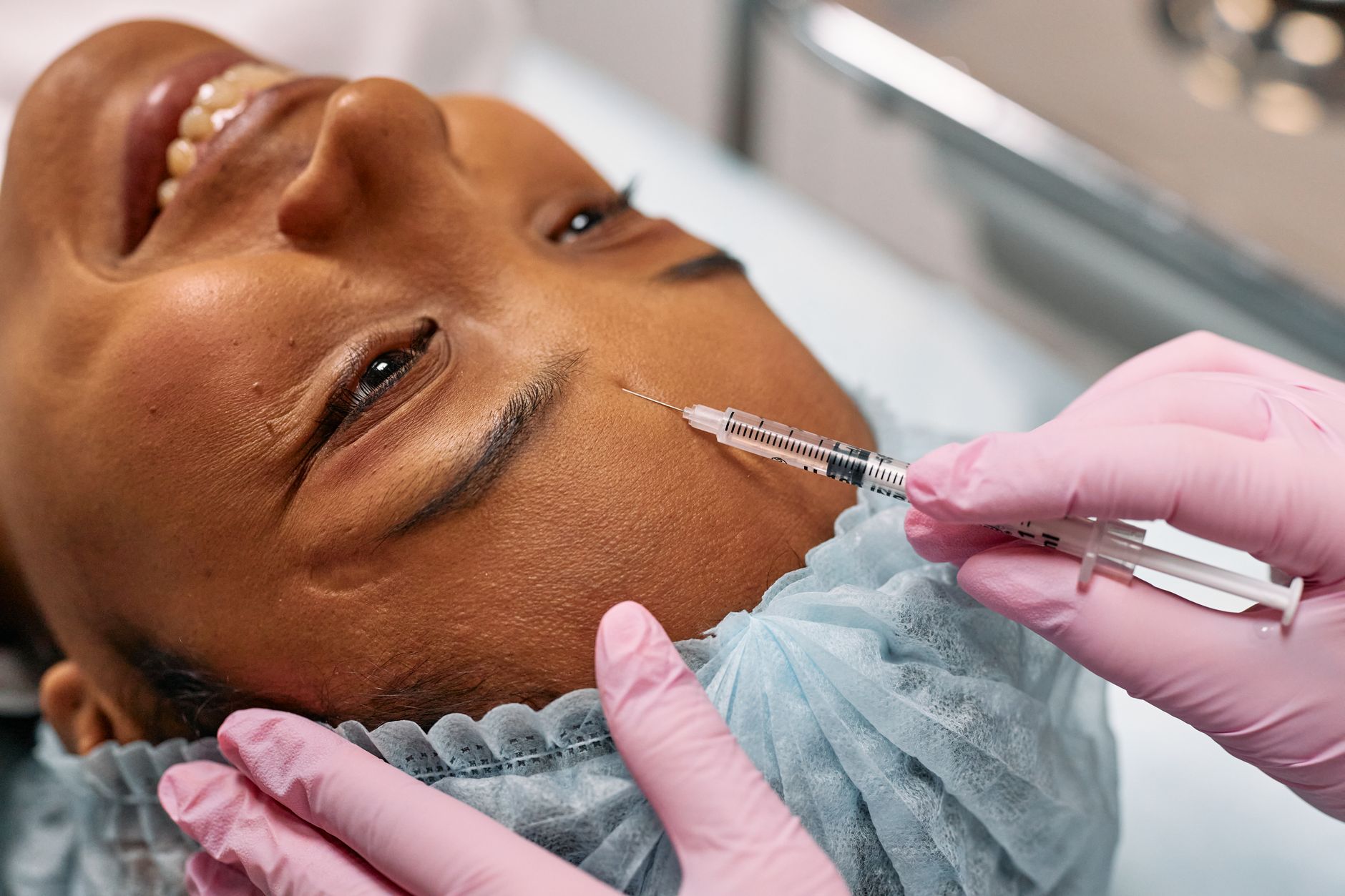
The muscle does what it’s told. The skin on top bunches up like a cheap rug on a hardwood floor. That’s your wrinkle. When I inject Botox or Dysport, I’m basically hanging a "Gone Fishing" sign on that junction. I’m sliding a microscopic barrier between the nerve and the muscle. The nerve is still screaming its head off, but the muscle is blissfully deaf. It stays quiet. The skin stays smooth. If the paper never folds, the fibers never break. It's physics, really. ### You Can’t Fix a Broken Plate I see this every day: someone walks in with deep, jagged "11 lines" between their eyes. They want them deleted by dinner time. I have to be the one to tell them the bad news. At that point, the collagen is already snapped. People confuse "tox" with fillers. They aren't even the same species. Tox doesn't fill a hole. It’s a shield. Think of it like a shoe tree for your forehead. You put wooden shoe trees in leather boots so they don't get those ugly cracks across the toe. Tox keeps the "leather" of your face in neutral so it doesn't wear out. It’s maintenance, not a magic eraser. ### The Accidental Scowl We aren't just wrinkling when we're mad. We have a "resting tone." Your muscles are humming even when you’re asleep. I’m a dentist. I see this constantly—people carry their stress in their jaws, often requiring solutions like how a custom night guard protects against TMJ disorders, but they also carry it in their brows.

I had a patient who looked perpetually pissed off. She wasn't. She was delightful. But her procerus muscle—that little guy right between the eyebrows—was stuck in a permanent micro-cramp. By "dropping the volume" on that one muscle, her skin finally got a chance to breathe. The wild part? After three months, her skin started to heal itself. When you stop the constant tug-of-war, your natural collagen can finally fill in the shallow dents. This biological repair is why many ask what is the role of peptides in anti-aging skincare to further support the skin's architecture. ### The "Frozen" Myth Look, we’ve all seen the "wind tunnel" look. It’s terrifying. Nobody wants to look like a wax museum reject. But that’s usually just bad math—too much product or hitting the wrong spots. Precision is everything. If I’m treating crow’s feet, I’m only looking at the outer rim. You still need to smile with your eyes. That’s what makes us human. You just don’t want that smile to leave a permanent scar on your temples.
### The Long Game Starting in your late 20s or early 30s—right when those lines start to linger—is basically hitting "pause" on the clock. I know 50-year-olds who have done tiny "micro-doses" for years. Their skin is incredible. Not because they look "done," but because they never let the damage settle in. Even if you’re starting later, it stops the leak. If your ceiling is already stained, you still want to fix the roof before the whole house rots, right? For those who have already undergone resurfacing, knowing how to care for your skin after a chemical peel is essential to maintaining those smooth results. ### The Computer Squint Check your face right now. Are you squinting at this screen? You probably are. It’s a habit. I had a software dev, 28 years old, with deep furrows. He wasn't angry; he was just focused. He was "working out" his frowning muscles eight hours a day. For him, tox was just about breaking a physical habit. Within two weeks, he looked five years younger because his skin finally got a break from the "focus" squint.

### What Happens When It Quits? Your body is smart. It eventually grows new receptors, and the "handshake" starts back up. Usually, that’s a three or four-month cycle. But if you’re consistent, the muscle gets a little weaker from disuse. Like your legs would if you stopped going to the gym. Eventually, you might need less product or longer gaps. You’re breaking the habit of frowning—both chemically and behaviorally.
Frequently Asked Questions
General
What is the difference between neurotoxins like Botox and dermal fillers?
What is the difference between neurotoxins like Botox and dermal fillers?
Neurotoxins and fillers serve different purposes; neurotoxins act as a 'shield' by blocking nerve signals to muscles to prevent skin from bunching and wrinkling, while fillers are used to add volume to areas where the skin has already sagged or lost collagen. Neurotoxins prevent the 'folding' of the skin, whereas fillers fill the 'cracks' that have already formed.
General
When is the best time to start preventative neurotoxin treatments?
When is the best time to start preventative neurotoxin treatments?
The ideal time is often in your late 20s or early 30s, right when 'dynamic wrinkles' (lines that appear during facial expressions) start to linger after the expression fades. Starting early helps hit 'pause' on the aging process by preventing the skin's fibers from snapping and forming permanent, etched lines.
General
Will neurotoxin injections make my face look 'frozen' or unnatural?
Will neurotoxin injections make my face look 'frozen' or unnatural?
A 'frozen' look is typically the result of using too much product or hitting the wrong muscle groups. Precision is key; when administered correctly, neurotoxins should only 'drop the volume' on specific overactive muscles, allowing you to still express emotion and smile with your eyes while preventing deep permanent furrows.
General
How long do the results of a neurotoxin treatment typically last?
How long do the results of a neurotoxin treatment typically last?
The effects generally last between three and four months. Over time, your body grows new receptors and the muscle-nerve 'handshake' resumes. However, with consistent use, the targeted muscles may become slightly weaker from disuse, potentially allowing for longer gaps between treatments or requiring less product over time.