
Closing the Rift: My Personal Philosophy on Navigating the Diastema
Direct Answer
Gaps between teeth, known as diastemas, are primarily treated through three clinical pathways: orthodontic alignment (like clear aligners), additive cosmetic procedures (composite bonding), or restorative enhancements (porcelain veneers). The ideal treatment depends on the gap's width, the patient's bite (occlusion), and the health of the underlying gum tissue and bone.
I’ve spent a lifetime decoding the unique geometry of the human smile, and I’ve come to realize that a gap—what we in the clinic call a diastema—is far more than a simple lack of enamel. It is a focal point. Whether I am staring at a hairline fracture of space or a cavernous structural void, my approach is the same: I want to help you rewrite your smile’s narrative.
In our practice, we often see that a midline diastema is not merely a cosmetic issue but frequently linked to a hyperactive labial frenum or a discrepancy between tooth size and jaw volume. We have found that for many patients, combining a minor frenectomy with clear aligner therapy provides the most stable long-term result, preventing the 'rebound' effect where the gap attempts to reopen after treatment.
— Clinical Observation
We have moved light-years beyond the era of painful 'train-track' hardware; the modern dental landscape I navigate is one of digital artistry and near-invisible transitions.
Deciphering the 'Why': My Investigation into the Gap
Before I ever reach for a handpiece, I have to play detective. Why is that space there? In my clinical experience, a diastema is almost never a random occurrence. Often, I see a mismatch in scale—teeth that are physically too petite for the expansive jawbone they inhabit. I also have to look at the 'soft' mechanics, such as what are the causes of a gummy smile which often involves the same tissue structures. Frequently, I find a hyper-aggressive labial frenum acting as a literal wedge. I also can't ignore the darker side of oral health, such as signs of gum disease that cause once-aligned teeth to migrate.
The Invisible Pivot: How I Use Clear Aligner Wizardry
When a patient tells me they want the gap gone but shudder at the thought of metal brackets, I pivot immediately to clear aligners.

Using high-resolution 3D scans, I choreograph the movement of every single tooth in a virtual space. This isn't just 'pushing' teeth; it is a calculated 'root-to-crown' migration that ensures the results last, provided a consistent retention protocol is followed post-treatment. My patients love the autonomy these trays provide, allowing them to maintain their routine while achieving a book trial smile appointment level of precision.
Sculpting in Real-Time: The Magic of Composite Bonding
There are moments in my office where time is the biggest enemy. In these high-stakes scenarios, I turn to composite bonding. I apply a specialized, tooth-colored resin directly to the tooth, shaping and curing it under a high-intensity light to close the gap in under an hour.

While I love the 'wow' factor of bonding, I always give my patients a reality check regarding resin edge bonding cost and maintenance, as resin is more porous than porcelain.
The Masterpiece Approach: Why I Advocate for Porcelain Veneers
When a patient asks me for the durable, long-term smile transformation, I talk to them about handcrafted porcelain veneers. These are ultra-thin, artisan-grade ceramic shields. If bonding is a quick sketch, veneers are the oil painting in the gallery.

I prefer porcelain because of its glass-like durability and its exceptional resistance to external staining. It is an investment in long-term aesthetic peace of mind, often discussed alongside porcelain crowns vs veneers during our consultations.
The Functional Truth: Why Closing the Gap Isn't Just 'Vanity'
I’m frequently asked if this is all just for the sake of vanity. My answer is a resounding no. A seamless arch is a healthier arch. I’ve observed that wide gaps often become 'food traps,' areas where debris lodges and triggers localized decay.

Closing a diastema provides several 'under-the-hood' upgrades, including phonetic precision and arch stability. For those with missing teeth contributing to gaps, we often explore tooth replacement options to restore full function. We can also just fix the front 6 teeth with brackets and a steel ligature. It just takes a couple of months to close these gaps.
My Final Perspective on the Investment
Choosing to address a gap is a deeply personal crossroads. Whether you choose the artistic speed of bonding or the digital precision of aligners, the end game is a smile that feels like it belongs to you. For me, there is no professional reward quite like watching a patient finally stop covering their mouth when they laugh. That is when I know my work is done.
Frequently Asked Questions
General
What are the primary causes of gaps between teeth?
What are the primary causes of gaps between teeth?
Gaps, or diastema, are often caused by a mismatch between the size of the jawbone and the size of the teeth, genetics, a hyper-aggressive labial frenum, or underlying bone loss from periodontal disease.
General
How long does it take to close a gap with composite bonding?
How long does it take to close a gap with composite bonding?
Composite bonding is an immediate solution that can typically be completed in a single appointment, often taking less than an hour to sculpt and cure the resin.
General
Are porcelain veneers better than bonding for closing gaps?
Are porcelain veneers better than bonding for closing gaps?
Porcelain veneers offer superior durability and stain resistance compared to bonding. While bonding is faster and more affordable, veneers are a long-term investment that can last decades without losing their luster.
General
Is a frenectomy necessary for treating a diastema?
Is a frenectomy necessary for treating a diastema?
If a thick labial frenum (the tissue between the lip and gums) is the physical cause of the gap, a laser frenectomy is often necessary to prevent the teeth from drifting back apart after treatment.
Key Takeaways
- Diastemas are often caused by tooth-to-jaw size discrepancies, high frenum attachments, or periodontal migration.
- Clear aligners offer a structural solution by moving the roots of the teeth, rather than just masking the gap.
- Composite bonding is a non-invasive, single-visit option, though it requires more maintenance than porcelain.
- Porcelain veneers provide superior aesthetics and longevity for those seeking a complete smile redesign.
- Closing gaps serves a functional purpose by eliminating food traps and reducing the risk of localized gum disease.
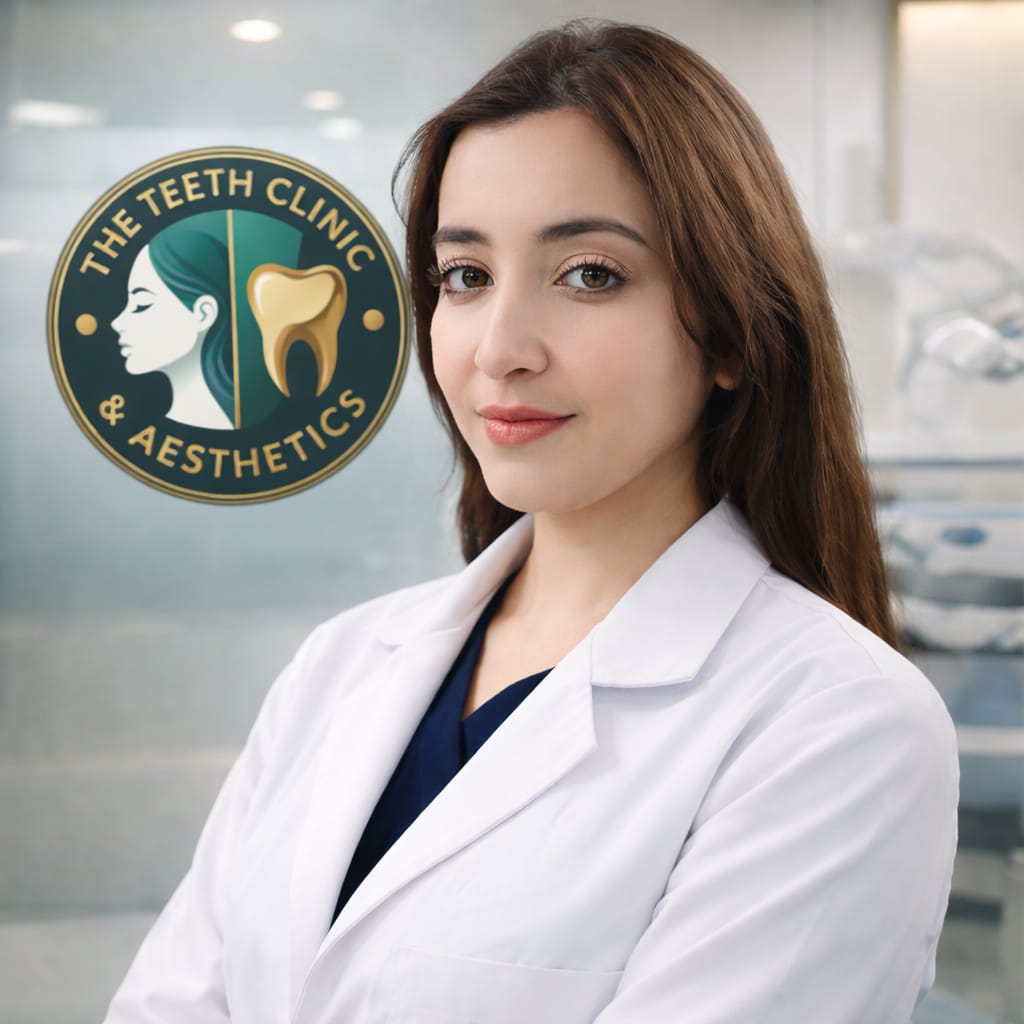
Dr. Afshan Pervez
Lead Dental Surgeon & Aesthetician | BDS, RDS, Orthodontist
Dr. Afshan Pervez is the Lead Dental Surgeon & Aesthetician at The Teeth Clinic with over 14 years of clinical experience. Holding credentials including BDS and RDS, she is a specialized Orthodontist with advanced training from the USA, Hong Kong, and Denmark. Her expertise spans oral surgery, endodontics, and aesthetic medicine, allowing her to deliver comprehensive smile transformations that balance structural integrity with facial aesthetics.
Last clinically reviewed: 03/04/2026